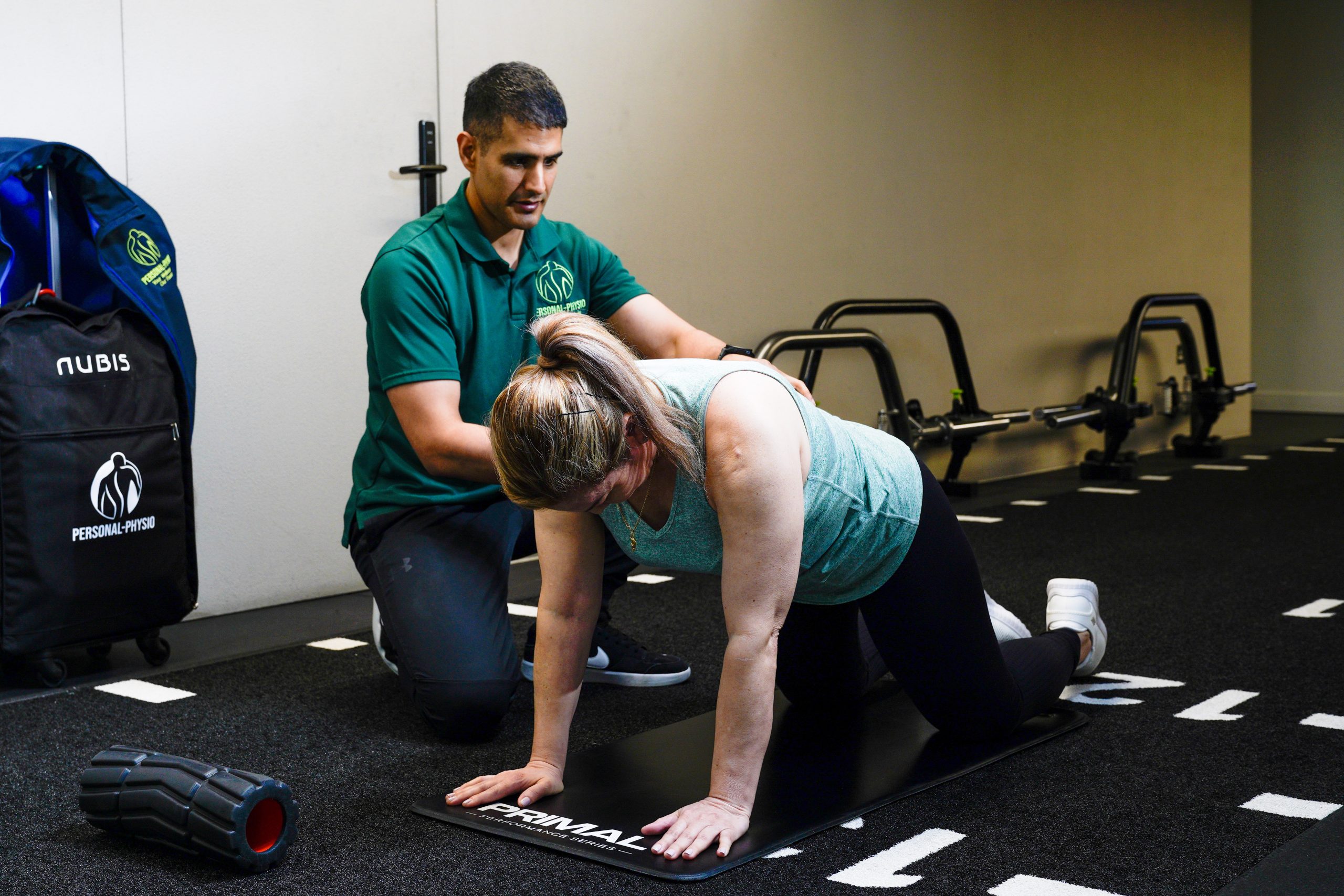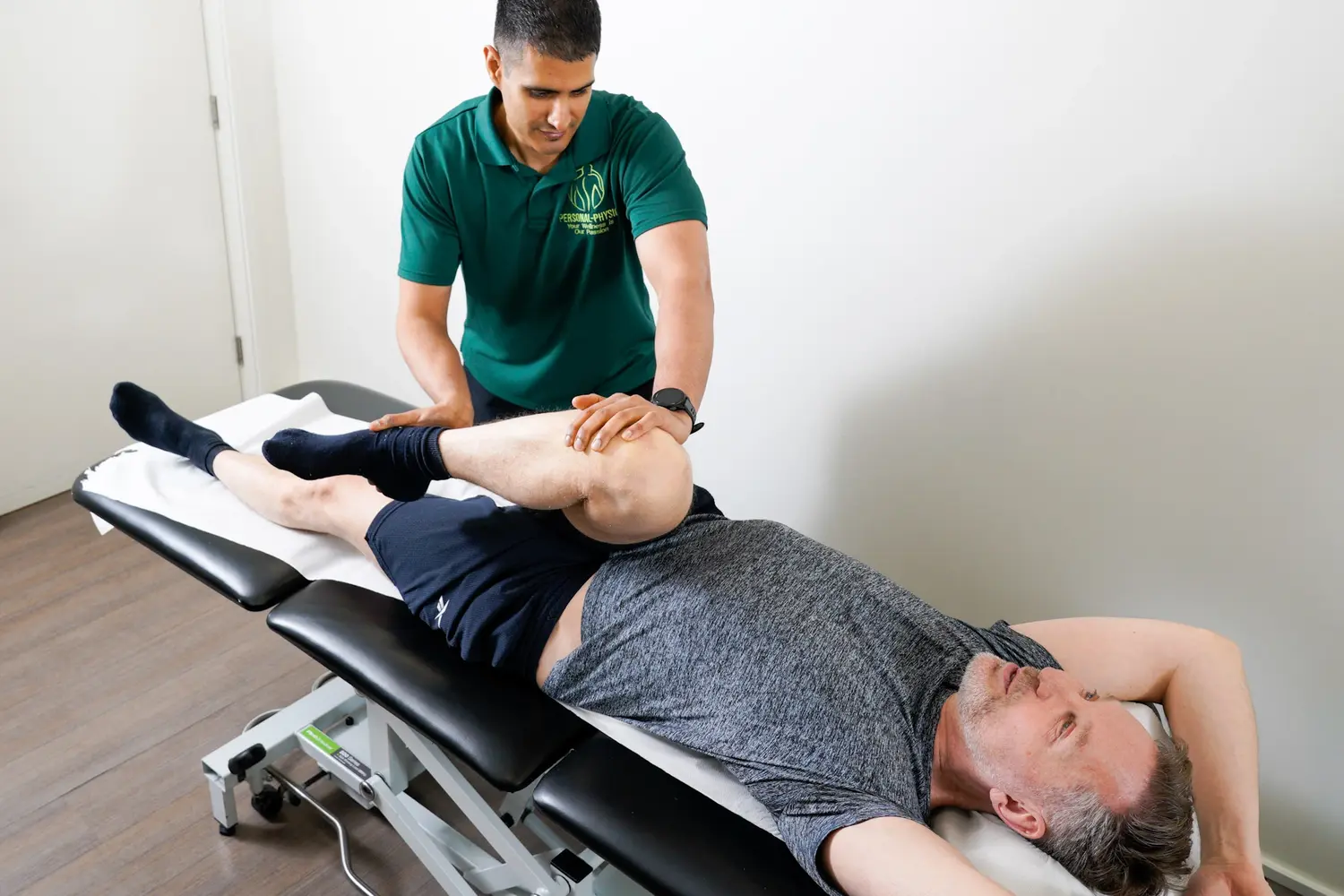
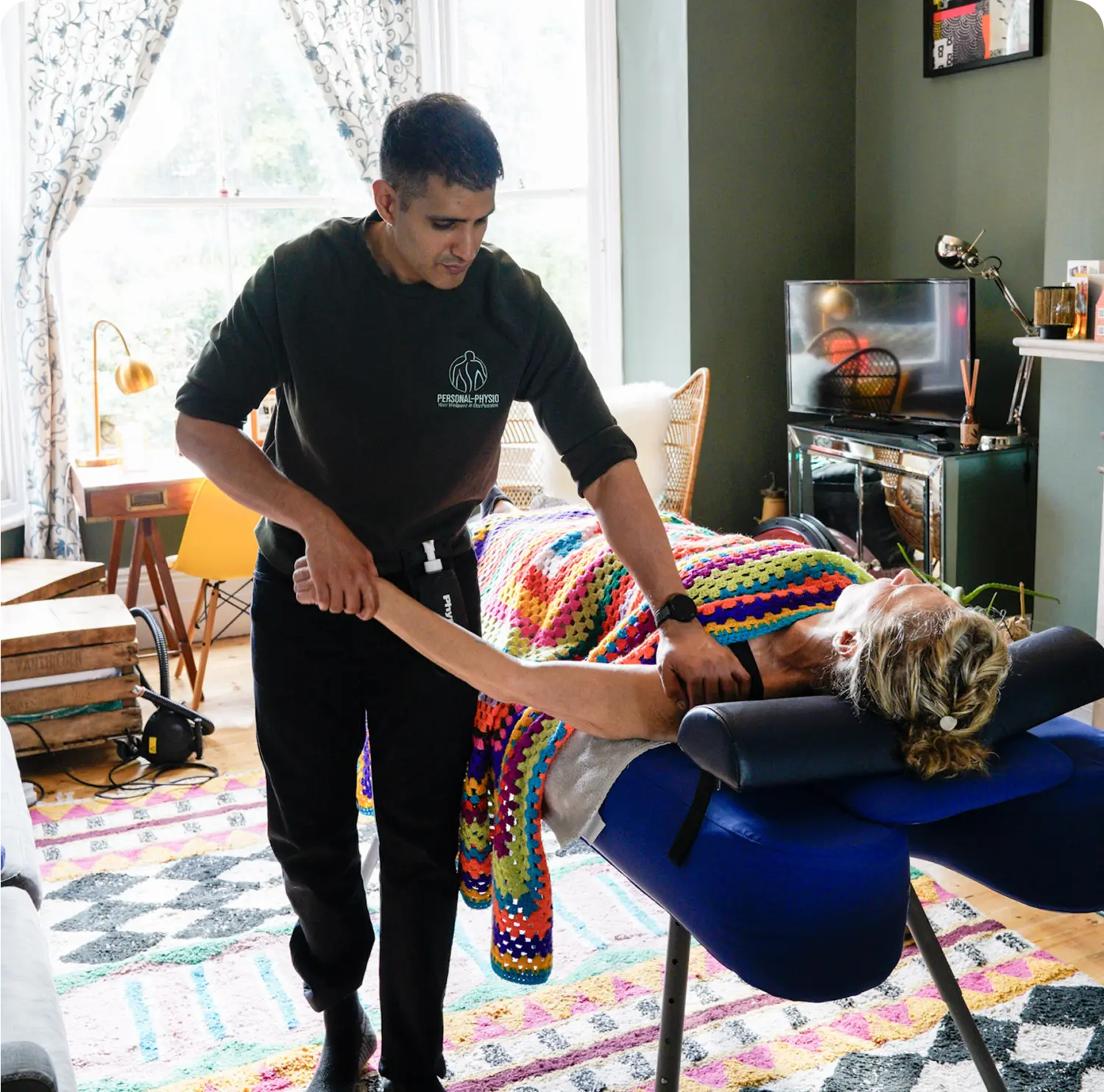
Frozen shoulder also known as adhesive capsulitis is a painful condition in which the shoulder gradually becomes increasingly stiff and difficult to move.
It can make relatively simple activities such as putting on a jacket, reaching into a cupboard, washing your hair or sleeping on the affected side surprisingly difficult.
Although frozen shoulder can take time to improve, understanding what is happening and matching treatment and exercise to the individual can help manage symptoms and gradually restore movement and function.
What is Frozen Shoulder?
Frozen shoulder primarily affects the glenohumeral joint — the ball-and-socket joint where the head of the upper-arm bone (humerus) meets the socket of the shoulder blade (glenoid).
The joint is surrounded by a flexible capsule that normally allows the shoulder to move through a large range.
In adhesive capsulitis, changes occur within this capsule involving inflammation followed by thickening, fibrosis and contracture. This makes the capsule less extensible and contributes to the characteristic loss of shoulder movement.
Shoulder Anatomy


The shoulder (glenohumeral) joint is surrounded by a flexible joint capsule. This capsule is one of the main structures affected in frozen shoulder.
Why does Frozen Shoulder develop and who gets it?
Sometimes there is no obvious reason why frozen shoulder develops. This is referred to as primary or idiopathic adhesive capsulitis.
In other cases it can occur following shoulder injury, surgery or a period of immobilisation, when it may be described as secondary adhesive capsulitis.
Frozen shoulder most commonly affects people in their 40s–60s and is more common in women. There is also an important association with metabolic and endocrine conditions, particularly diabetes and thyroid disorders.
The association with diabetes is particularly strong. A 2026 systematic review and meta-analysis found that people with diabetes had approximately 3.7 times greater odds of developing adhesive capsulitis, although this association does not necessarily mean that diabetes directly causes the condition.
What are the symptoms?
Frozen shoulder usually develops gradually. Common features include:
- Increasing shoulder pain, which can be particularly troublesome at night
- Progressive stiffness and loss of movement
- Difficulty reaching overhead or behind your back
- Difficulty dressing, washing your hair or putting on a coat
- Difficulty sleeping on the affected side
- Restriction of both active movement (you moving your arm) and passive movement (someone else moving it for you)
Loss of external rotation — turning the arm outwards is particularly characteristic and forms an important part of clinical assessment.
The stages of Frozen Shoulder
Frozen shoulder is traditionally described as progressing through three stages:
1. Freezing
Pain is often the dominant symptom while shoulder movement becomes progressively more restricted.
2. Frozen
Stiffness tends to become more prominent. Pain may begin to settle, but everyday activities can remain significantly restricted.
3. Thawing
Movement and function gradually begin to improve.
This is a useful way of understanding the condition, but real-life recovery doesn’t always follow three perfectly distinct stages or a predictable timeline.
The Frozen Shoulder Journey

FREEZING → FROZEN → THAWING
Pain & increasing stiffness → Stiffness more prominent → Movement gradually improves
Frozen shoulder doesn’t always progress through these stages in a perfectly predictable or linear way.
How is frozen shoulder diagnosed?
Diagnosis is primarily based on your history and clinical examination.
One of the key findings is restriction of both active and passive shoulder movement, particularly external rotation.
Other conditions can also cause shoulder pain and stiffness, including osteoarthritis, rotator cuff problems and previous trauma. Imaging may therefore sometimes be used to exclude other causes rather than simply to confirm frozen shoulder. Current UK shoulder guidance does not recommend routine ultrasound or MRI for straightforward frozen shoulder in primary care.
What is the best treatment for Frozen Shoulder?
There isn’t one treatment that is best for everybody.
Management should consider the severity and irritability of the shoulder, stage of the condition, functional limitations and individual goals. UK guidance includes education, appropriate pain relief, exercise, physiotherapy/manual therapy and intra-articular corticosteroid injection among conservative treatment options.
Physiotherapy and exercise
Exercise is an important part of rehabilitation, but this doesn’t necessarily mean aggressively stretching a painful shoulder.
In the more painful and irritable stages, treatment may focus on maintaining comfortable movement, managing symptoms and modifying particularly aggravating activities.
As symptoms become more manageable, exercise can progressively address mobility, strength and function.
Research supports exercise, with or without joint mobilisation, for improving movement and patient-reported outcomes. Importantly, programmes should be adjusted according to the person’s symptoms and movement restrictions rather than applying the same protocol to everybody.
Manual therapy may also be used alongside exercise where appropriate, but I wouldn’t describe treatment as simply trying to “break up adhesions”.
Corticosteroid injections
An intra-articular corticosteroid injection may be considered, particularly when pain is significant. The aim is generally short-term symptom relief, which may also make movement and rehabilitation easier to tolerate.
It isn’t necessarily a stand-alone solution, and whether an injection is appropriate should be considered alongside the person’s presentation and medical history. Corticosteroid injection is included within current UK conservative-management guidance.
For persistent or severe cases that don’t respond adequately to conservative management, interventions such as hydrodilatation, manipulation under anaesthetic or arthroscopic capsular release may sometimes be considered following specialist assessment.
What exercises can help Frozen Shoulder?
There isn’t one special set of “frozen shoulder exercises”. Exercise selection and intensity should change as the shoulder changes.
Some examples include:
1. Assisted external rotation
Using a stick or resistance band to gently assist the arm outwards within a tolerable range.
2. Table or wall slides
Using support to gradually work on shoulder elevation.
3. Active movement
Gradually increasing your ability to move the shoulder independently through the available range.
4. Progressive strengthening
As movement and symptoms improve, resistance can gradually be introduced to rebuild shoulder strength and function.
Exercise Progression

Assisted External Rotation → Wall/Table Slide → Active Movement → Progressive Strengthening
More aggressive stretching isn’t necessarily better.
Exercise should be matched to how irritable the shoulder is and progressed as pain, movement and function change.
How long does Frozen Shoulder last?
Frozen shoulder can be frustrating because recovery is often measured in months rather than weeks.
Many people improve substantially over time, but the duration varies considerably and some people experience persistent restrictions. It is therefore better to think of recovery as an individual process rather than expecting everyone to follow a fixed timetable.
When should you seek help?
Consider seeking professional assessment if you have increasing shoulder pain or stiffness, significant night pain, difficulty with normal daily activities, or symptoms that are not improving as expected.
Assessment is also important because not every painful, stiff shoulder is a frozen shoulder. A clear diagnosis helps determine what treatment and exercise are appropriate.
How can Personal-Physio help?
Physiotherapy assessment can help establish whether your symptoms are consistent with frozen shoulder, assess your current movement and function, and identify how the condition is affecting the activities that matter to you.
Treatment can then be adapted as the shoulder changes using education, symptom management, hands-on treatment where appropriate and progressive exercise to help restore movement, strength and confidence.
Assess. Treat. Rebuild. Perform.
Move Better. Get Stronger. Stay Capable.
References
British Elbow and Shoulder Society (BESS) (2021) Shoulder Pain: Primary, Community and Intermediate Care Guidelines. British Elbow and Shoulder Society.
Diekemper, A. et al. (2026) ‘Adhesive Capsulitis: A Comprehensive Review of Pathogenesis, Diagnosis, and Clinical Management’, Iowa Orthopaedic Journal, 46(1), pp. 107–118.
Hernigou, P. and Scarlat, M.M. (2026) ‘The diabetic shoulder: association between diabetes mellitus and adhesive capsulitis – a systematic review and meta-analysis’, International Orthopaedics, 50(4), pp. 839–851.
Le, H.V., Lee, S.J., Nazarian, A. and Rodriguez, E.K. (2017) ‘Adhesive capsulitis of the shoulder: review of pathophysiology and current clinical treatments’, Shoulder & Elbow, 9(2), pp. 75–84.
Lee, J.H., Jeon, H.G. and Yoon, Y.J. (2023) ‘Effects of Exercise Intervention (with and without Joint Mobilization) in Patients with Adhesive Capsulitis: A Systematic Review and Meta-Analysis’, Healthcare, 11(10), 1504.