Back Pain Physiotherapy Soho, Central London
Fix the Cause. Restore Movement. Stay Pain-Free.
Structured physiotherapy focused on identifying the root of your pain and rebuilding strength for long-term recovery.
Understand Your Pain and Why It’s Not Improving
Back pain often starts as a mild discomfort but gradually begins to affect how you sit, stand, or move throughout the day. You may notice stiffness when getting up from a chair, discomfort when bending or lifting, or a constant tightness that doesn’t fully settle.
Over time, it becomes more noticeable and begins to influence how you move without realising it. Simple tasks such as putting on shoes, lifting a bag, or turning in bed may start to feel restricted.
In many cases, this develops due to a combination of posture, muscle strain, or increased load on the spine over time. Left unaddressed, it can limit movement and reduce your ability to stay active.
Physiotherapy focuses on identifying the cause of the issue, reducing pain, and restoring movement through a structured approach to recovery.
Back pain physiotherapy helps reduce pain, restore movement, and address the underlying cause to prevent recurrence.

How Back Pain Affects Your Movement
Back pain rarely stays isolated, it shows up in how you move throughout the day.
You may notice stiffness, reduced flexibility, or a feeling of weakness during certain movements.
Over time, it affects how you work, exercise, and handle daily tasks, not just the pain, but how consistently it limits your movement.
Sitting for longer periods can become uncomfortable, especially when trying to stand up or change position
Pain may follow certain patterns depending on movement or position
Bending forward or lifting objects may trigger discomfort
Simple movements like tying your shoes can also feel restricted
Standing for longer periods or walking short distances may start to feel tiring
When to Seek Physiotherapy for Back Pain
It is worth seeking treatment if pain has been present for several days without improvement or is becoming more noticeable over time.
If movement starts to feel restricted or uncomfortable, or if the problem keeps returning and interrupts your routine, it usually indicates that the issue needs attention.
When everyday activities such as sitting, walking, bending, or lifting begin to feel affected, addressing it early helps prevent it from becoming more persistent.

Clinical Services
How Physiotherapy Treats Back Pain
Physiotherapy takes a structured approach to back pain, focusing on both the symptoms and the underlying cause.
Identify what’s actually driving your pain
This begins with a detailed assessment of how you move, identifying the factors contributing to the issue rather than just where the pain is felt.
Reduce pain, then rebuild strength and control
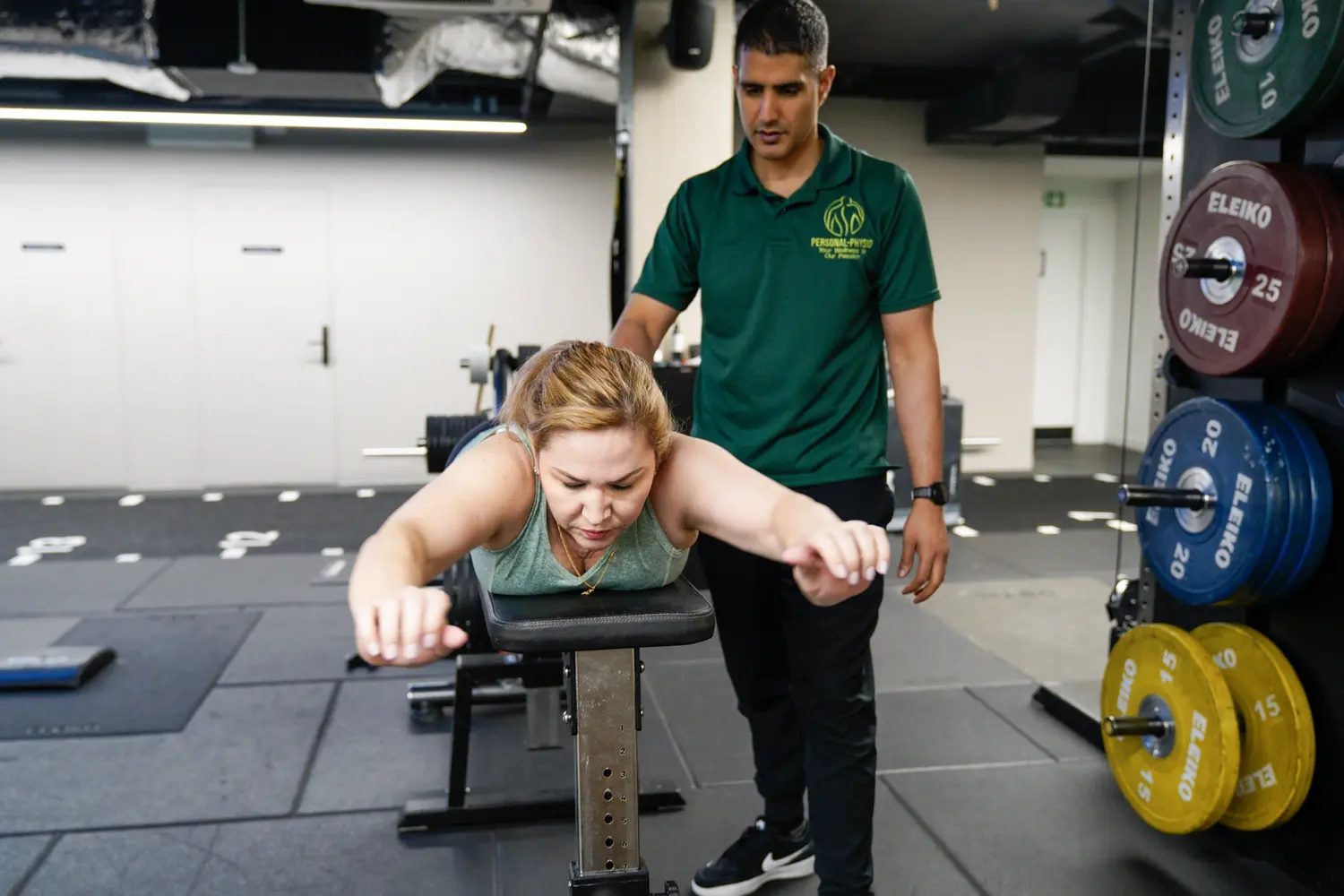
Treatment may include hands-on techniques to reduce pain and improve mobility where needed, followed by targeted exercises to restore strength and control. You’ll also receive guidance on posture and movement patterns to reduce strain and improve control.
Progressive rehab to prevent the problem returning
As symptoms settle, rehabilitation progresses to improve how your body handles movement and load. This follows a structured rehabilitation approach focused on long-term results. The aim is to support long-term recovery and help you return to normal activity with better movement and confidence.

Back Pain We Commonly Treat
Each condition is approached based on how it presents and how it affects movement, ensuring treatment is specific to your needs.
Upper back pain
Muscle strain & soft tissue injury
Disc-related pain
Postural back pain
What You Can Expect From Treatment
With the right approach, you can expect:
- Reduced pain and stiffness
- Improved ease and confidence in movement
- Better strength and control for daily and physical activity
- Improved posture and overall movement quality
- A structured return to normal activity
Recovery is progressive and tailored to how your body responds to treatment.

Client Results
What clients are saying.
~M. Phillips
“Excellent massage from Samir, he helped solve a lower back pain issue I’ve been experiencing. He’s very knowledgeable, a great therapist and good to chat to too, I would really recommend him and I look forward to another booking soon!”
~N. Hill
“Practical and clearly articulated help for sudden back pain. Samir spent the time helping me to note the exercises I need to do to alleviate the discomfort and regain mobility.”
~ Ana
“Samir was knowledgeable friendly and took the time to assess my back pain. Have already rebooked for another session.”
~ Martin Litman
“I had a really sore back from lifting a case out of an overhead compartment. I phoned Hampstead Boost and made a next day appt. to see Samir. In one hour, Samir examined my back, manipulated and soothed my back and gave me some exercises to do at home. I made a second appt. which I cancelled after a few days because my back was no longer painful. I have nothing but praise for the speed and ease in making an appt. and for the treatment I received. Thanks, Samir.”
A Different Approach to Back Pain
A structured approach that goes beyond short-term pain relief, identifying the cause, rebuilding strength, and restoring confident movement.
Treatment integrates hands-on techniques with strength-based rehabilitation, delivered within a high-quality rehab and training environment in Soho, Central London.
The focus is on long-term recovery and performance, not just short-term symptom relief.
Designed for individuals who want to move better, stay active, and build lasting confidence in their movement.

Frequently asked questions.
What type of back pain can physiotherapy help with?
Physiotherapy can help with many forms of back pain, including lower back pain, upper back stiffness, pain linked to prolonged sitting, movement-related pain, recurring flare-ups, muscle tension, and back pain associated with reduced strength or mobility.
At Personal-Physio, the first step is understanding how your symptoms behave, what may be contributing to the problem, and what your body needs to tolerate again — whether that is desk work, training, lifting, running, or everyday activity.
Do I need a scan before seeing a physiotherapist for back pain?
In many cases, you do not need a scan before starting physiotherapy. Back pain is often assessed through a detailed discussion, movement assessment, strength testing where appropriate, and screening for any signs that further medical investigation may be needed.
If your symptoms suggest that imaging, medical review, or onward referral is appropriate, this will be discussed clearly during your assessment.
What happens during a back pain physiotherapy assessment?
Your assessment will usually include a detailed history of your symptoms, lifestyle, work demands, training habits, previous injuries, and goals. We then assess movement, sensitivity, mobility, strength, and any relevant contributing factors.
The aim is not only to identify where you feel pain, but to understand why the problem may be persisting and what needs to change for longer-term recovery.
Is back pain always caused by poor posture?
Not usually. Posture can contribute to symptoms, especially if you spend long periods in one position, but back pain is rarely explained by posture alone.
Movement variety, strength, stress, sleep, recovery, training load, previous injuries, and how much your body is being asked to tolerate can all play a role. Rather than chasing a “perfect posture”, the focus is often on helping you move more confidently and build better physical capacity.
Can hands-on treatment help back pain?
Yes, hands-on treatment can be helpful for many people with back pain, especially where there is muscle tension, stiffness, guarding, or discomfort with movement.
At Personal-Physio, hands-on treatment may include soft tissue therapy, sports massage, joint mobilisation, acupuncture or dry needling where appropriate. It is usually most effective when combined with clear advice, movement work, and progressive rehabilitation rather than used as a standalone quick fix.
Will I be given exercises for my back pain?
Yes. Most clients receive tailored exercises based on their symptoms, goals, and current level of function.
These may include mobility exercises, trunk and hip strengthening, movement control, graded exposure to bending/lifting, gym-based rehabilitation, or return-to-sport progressions depending on what you need.
How many sessions will I need for back pain?
This depends on how long the pain has been present, how irritable the symptoms are, your goals, and whether the issue is a short-term flare-up or a recurring problem.
Some acute episodes improve within a few sessions, while longer-standing or recurring back pain may benefit from a more structured rehabilitation plan over several weeks. Your physiotherapist will discuss a realistic plan after your assessment.
Can I keep exercising if I have back pain?
In many cases, yes — but it depends on the type and severity of symptoms. Complete rest is rarely the best long-term strategy, but your training may need to be modified temporarily.
Physiotherapy can help you understand which movements are currently suitable, which may need adjusting, and how to progressively rebuild confidence with exercise, lifting, running, or sport.
When should I seek urgent medical advice for back pain?
You should seek urgent medical advice if your back pain is associated with symptoms such as new bladder or bowel changes, numbness around the saddle area, severe or progressive leg weakness, unexplained weight loss, fever, recent significant trauma, or severe unrelenting pain that does not ease.
These symptoms are uncommon, but they should be taken seriously. If they are present, medical review is recommended before continuing with physiotherapy.
Do you treat back pain at UNTIL Soho?
Yes. Personal-Physio provides back pain physiotherapy from UNTIL Soho in Central London. Sessions may include assessment, hands-on treatment, movement rehabilitation, gym-based strengthening, and advice tailored to your work, lifestyle, and activity goals.
Home visit physiotherapy is also available across London where appropriate.
Is physiotherapy suitable for recurring back pain?
Yes. Recurring back pain often needs more than short-term symptom relief. The aim is to understand why symptoms keep returning and to improve the body’s ability to tolerate work, training, lifting, and daily activity.
This may involve a combination of hands-on treatment, education, mobility work, progressive strengthening, and practical changes to how you move and load your body.
What makes Personal-Physio different for back pain treatment?
Personal-Physio combines detailed assessment, hands-on treatment, rehabilitation and clinical strength & conditioning. The focus is not only on reducing pain, but also restoring movement, rebuilding strength, improving confidence, and supporting long-term recovery.
The approach is one-to-one, personalised, and designed around your specific lifestyle, work demands, training goals and recovery needs.
Ready to Fix the Problem?
Book your appointment and start addressing the root cause of your back pain with a clear, structured plan.