
Back and neck pain are extremely common for people who spend long hours at a desk.
You finish a day of emails, meetings and screen time with a stiff neck, tight shoulders or an aching lower back — and the first thing most people blame is their posture.
It is understandable. We are often told to sit up straighter, stop slouching, pull the shoulders back, lift the screen higher or buy a better chair. Sometimes those changes can help. But in most cases, posture is only one part of the story.
At Personal-Physio, I often see office workers, busy professionals and active adults who have already tried to “fix their posture” but still feel stiff, sore or restricted. Usually, the issue is not that they have one terrible position that needs correcting. More often, the body is simply being asked to tolerate the same positions, pressures and workloads for too long without enough movement, strength or recovery.
Good treatment for back and neck pain should therefore go beyond telling someone to sit differently. It should look at how you move, what aggravates your symptoms, how your work and training habits affect things, and what your body needs to feel more comfortable and resilient again.
There Is No Single Perfect Posture
Posture does matter, but it is not as simple as “good posture prevents pain” and “bad posture causes pain”.
The body is designed to move and adapt. Sitting slightly rounded, leaning to one side, crossing your legs or looking down at a laptop are not automatically harmful. The bigger issue is usually when any position is held for too long, too often, without enough variation.
Even a very upright sitting posture can become uncomfortable if you hold it rigidly for hours. Equally, a more relaxed posture is not necessarily a problem if you move regularly, change position and have the strength and tolerance to cope with your daily demands.
A more useful way to think about posture is this:
Your best posture is usually your next posture.
In other words, the goal is not to sit perfectly all day. The goal is to create more movement variety, reduce excessive time in one position and build a body that is better prepared for the demands of work, training and everyday life.
Why Desk Work Can Lead to Back and Neck Pain
Desk-related back and neck pain is usually multi-factorial. That means there is rarely one single cause. Several things often build up together.
1. Too Much Time in One Position
The human body generally does not like being still for long periods.
If you spend hours sitting at a laptop, your neck, upper back, lower back and hips may start to feel stiff or overloaded. This does not necessarily mean anything is damaged. It may simply mean the area is becoming sensitive to sustained loading and lack of movement.
Small changes throughout the day can make a meaningful difference. Standing up, walking, rotating your spine, gently moving your neck or simply changing your seated position can all help reduce the build-up of stiffness.
2. Lack of Movement Variety
Many people focus on finding the perfect ergonomic setup, but even the best chair cannot replace regular movement.
Desk work often keeps the body in a narrow range. The hips stay flexed, the upper back rounds slightly, the shoulders sit forward and the neck stays focused on a screen. Over time, some areas can start to feel stiff, tired or underused.
The solution is not to panic about posture. It is to reintroduce movement variety: bending, extending, rotating, walking, reaching, strengthening and gradually loading the body in different ways.
3. Stress, Workload and Muscle Tension
Back and neck pain are not purely mechanical. Stress, pressure, deadlines and poor recovery can all influence pain sensitivity and muscle tension.
Many busy professionals carry tension around the neck, shoulders, jaw and upper back. That does not mean the pain is “all in your head”. It means the nervous system, muscles and lifestyle factors are all interacting.
If your symptoms are worse during stressful periods, after poor sleep or during busy work phases, that information matters. A good physiotherapy assessment should consider these factors rather than only looking at your posture or desk setup.
4. Reduced Strength and Load Tolerance
Pain often appears when the demands on the body exceed its current capacity.
For example, someone may sit at a desk all week, then go into a heavy gym session, long run, football match or weekend of DIY. If the body is not prepared for those spikes in load, symptoms can flare.
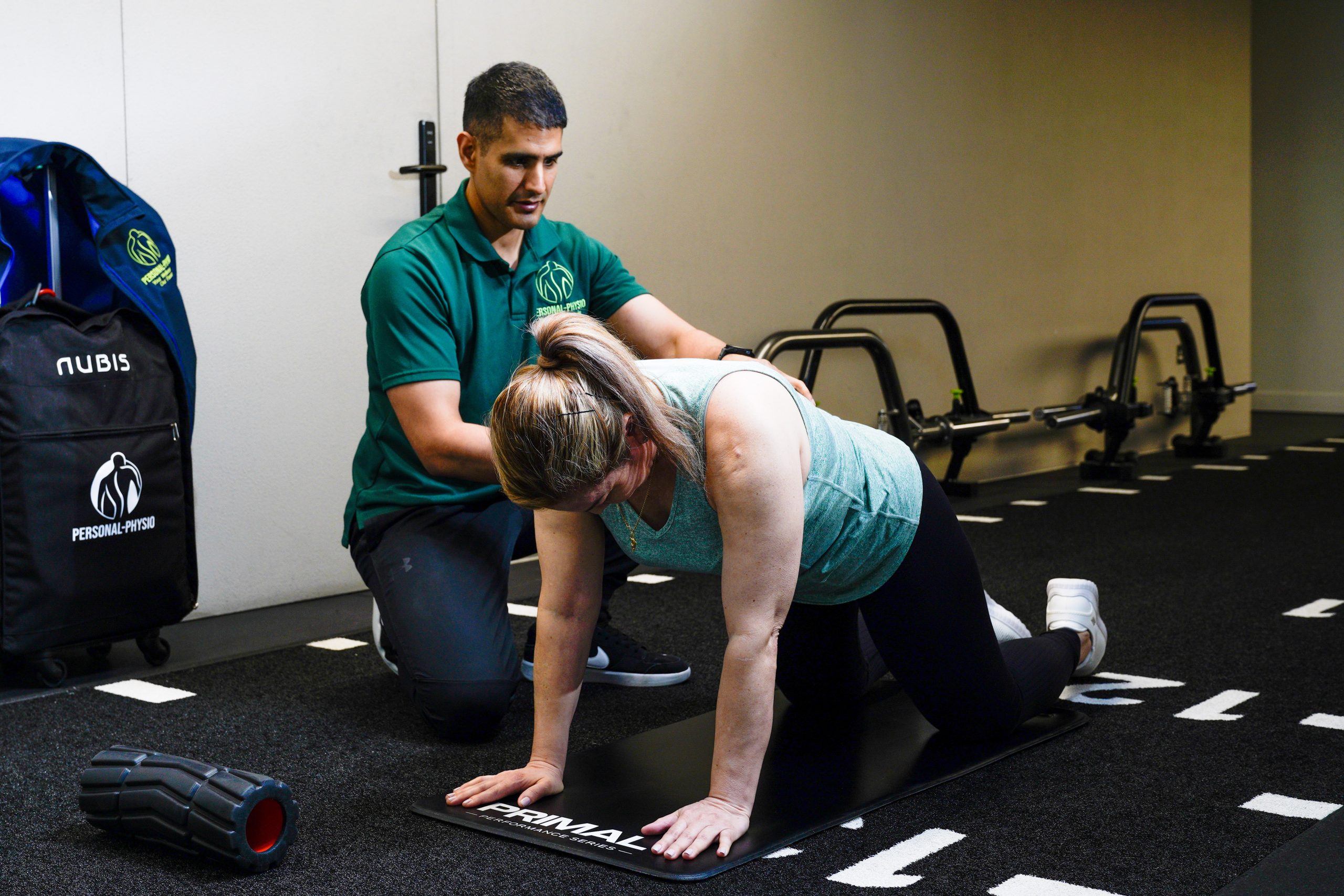
Strength training helps improve the capacity of muscles, joints and tendons to tolerate daily life and physical activity. For back and neck pain, this might involve work for the upper back, shoulders, trunk, hips and legs — not just a few stretches for the painful area.
5. Sleep and Recovery
Poor sleep can increase pain sensitivity and reduce your ability to recover from physical and mental stress.
If you are sleeping badly, working long hours and not moving much, your body may become more reactive to positions and activities that would normally be fine.
This is why back and neck pain management often needs a broader approach. Exercises matter, but so do recovery, routine, workload and general activity levels.

Common Mistakes People Make
When back or neck pain is linked to desk work, people often try to solve it in ways that make sense — but do not always address the full picture.
Trying to Hold Perfect Posture All Day
Constantly forcing yourself to sit upright can create more tension, not less. It is tiring to hold any position rigidly for hours.
Instead of chasing perfect posture, aim to change position more often. Sit upright sometimes, relax sometimes, stand sometimes, walk sometimes. Variation is usually more helpful than rigidity.
Stretching Constantly but Never Strengthening
Stretching can feel good, especially when the neck, shoulders or lower back feel tight. But if symptoms keep returning, stretching alone may not be enough.
A muscle can feel tight because it is stiff, but it can also feel tight because it is tired, sensitive, under-conditioned or guarding. In those cases, strengthening and graded loading are often more useful for long-term change.
Relying Only on Massage or Hands-On Treatment
Hands-on treatment can be very helpful, especially when pain, stiffness or muscle tension is limiting movement. Many people feel better after soft tissue therapy, sports massage, joint mobilisation, acupuncture, dry needling or manual therapy.
However, if the same symptoms keep returning, it is usually a sign that the underlying load tolerance, movement habits or strength deficits also need to be addressed.
The best results often come from combining hands-on treatment with a clear rehabilitation plan.
Avoiding Movement Because Pain Feels Worrying
Pain can be unsettling, especially when it affects the spine. But most desk-related back and neck pain is not dangerous. Avoiding movement completely can sometimes make the area feel even more sensitive and stiff.
The key is to find the right level of movement: enough to build confidence and tolerance, but not so much that symptoms flare significantly.
Following Random Exercises Without a Clear Plan
Generic online exercises may help some people, but they are not always matched to your specific presentation.
One person with neck pain may need upper-back mobility and shoulder strength. Another may need workload changes and stress management. Someone else may need progressive gym-based strengthening. The right plan depends on assessment.
What Actually Helps?
Effective management of back and neck pain usually involves a combination of symptom relief, movement, strength and better load management.
1. Move More Often During the Day
You do not need a complicated routine to start improving desk-related stiffness. Small, regular movement breaks can be very effective.
Useful options include:
- Standing up every 30–60 minutes
- Walking during phone calls
- Changing your sitting position regularly
- Doing a few gentle neck turns or shoulder rolls
- Opening the chest and upper back after long periods at a laptop
- Taking short walks between blocks of focused work
The aim is not to perform perfect exercises every hour. The aim is to stop your body being stuck in one position for too long.
2. Use Ergonomics as a Support, Not the Whole Solution
A better desk setup can help, especially if your current setup is clearly uncomfortable. Screen height, chair position, keyboard, mouse and laptop setup can all influence comfort.
But ergonomics should support movement, not replace it.
You can have an excellent chair and still develop pain if you sit still for eight hours, do very little strength work and have high stress. Equally, you can have a less-than-perfect setup and feel fine if you move regularly and your body has good capacity.
3. Build Strength and Capacity
Strength training is one of the most useful long-term tools for back and neck pain.
This does not mean everyone needs to lift heavy weights straight away. It means gradually improving the ability of your body to tolerate load.
Depending on the person, this may include:
- Upper-back and shoulder strengthening
- Trunk and hip strengthening
- Rowing and pulling movements
- Squat, hinge and carry variations
- Neck and shoulder control exercises
- Gradual return to gym training or sport
- Work on balance, confidence and movement quality
For office workers, strength training can help bridge the gap between a sedentary working day and the physical demands of training, commuting, parenting, sport or everyday life.
4. Manage Training and Lifestyle Load
Sometimes the issue is not the desk alone. It is the combination of desk work, stress, poor sleep and sudden spikes in exercise.
For example, if you sit all week and then suddenly do a hard gym session, long run or intense class, your back or neck may react. This does not mean the activity is bad. It may simply mean your body needs a more progressive build-up.
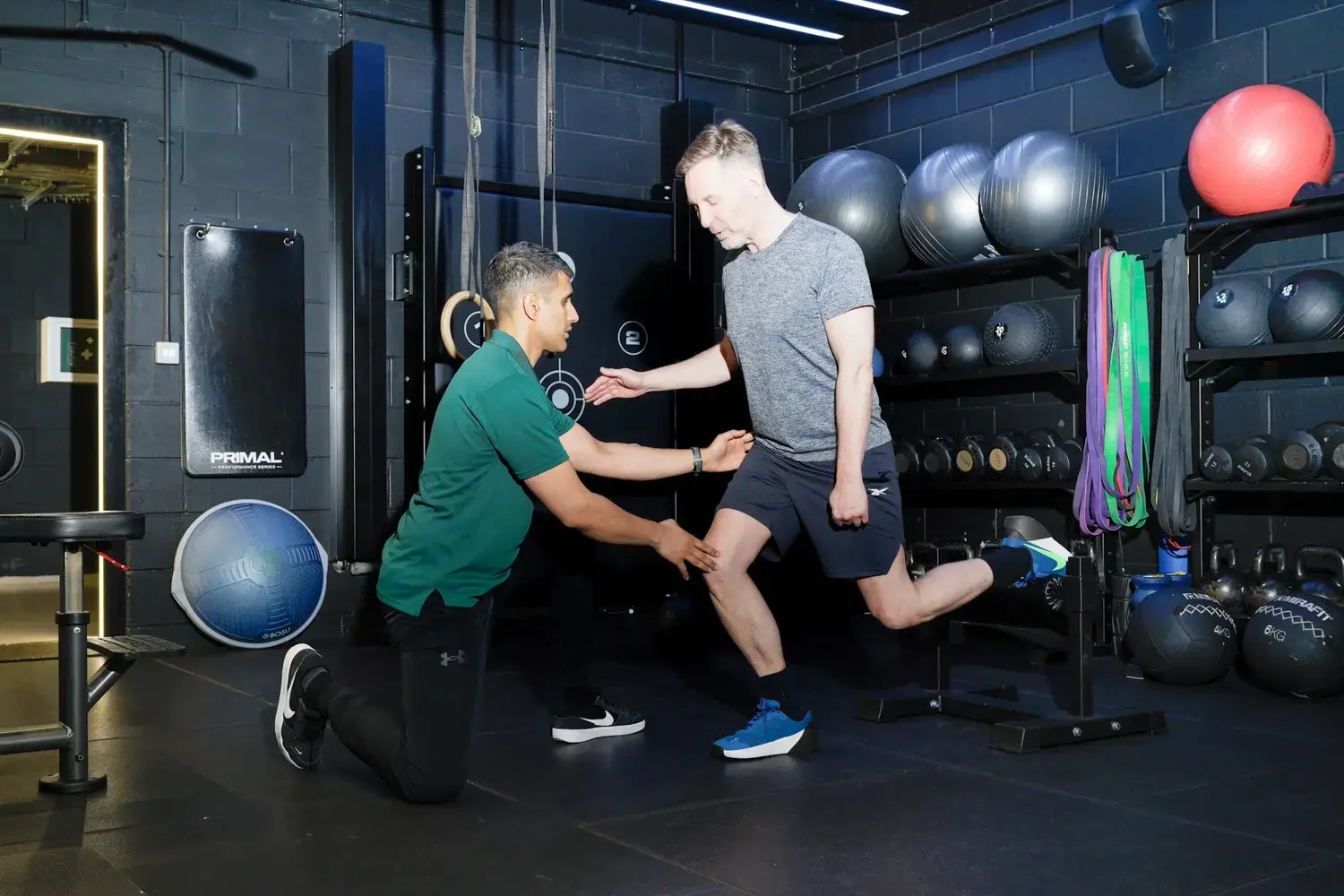
A good rehab plan should help you keep active while adjusting the dose, intensity and progression of exercise.
Where Hands-On Treatment Fits
Hands-on treatment is an important part of the way we work at Personal-Physio where it is clinically appropriate.
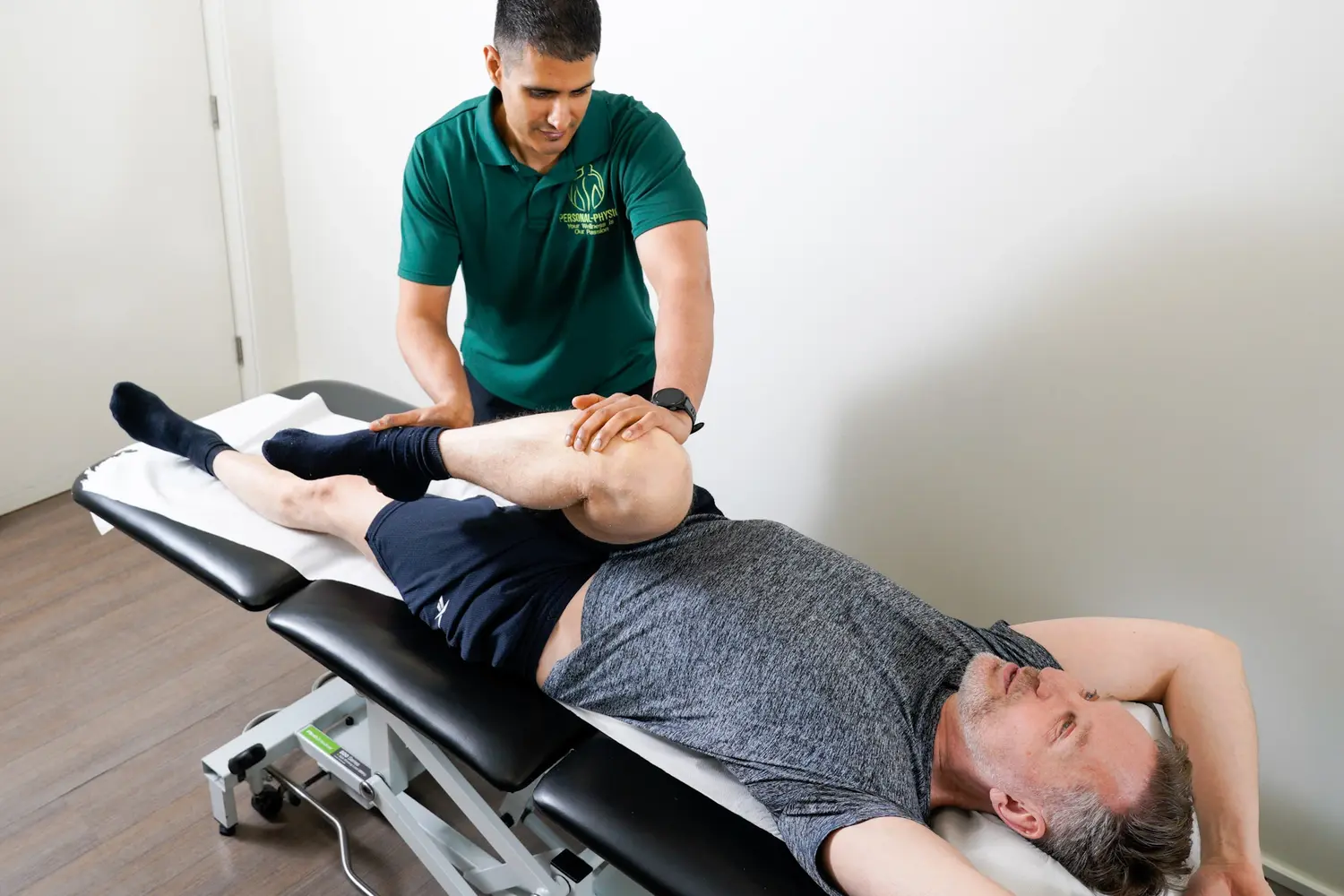
For many people with desk-related back or neck pain, hands-on treatment can help reduce pain, stiffness and muscle tension. It may also improve comfort and create a useful window for better movement.
This might include soft tissue therapy, sports massage, joint mobilisation, acupuncture or dry needling, depending on the presentation and your preferences.
The important point is that hands-on treatment should not be seen as separate from rehabilitation. It works best when it is used as part of a broader plan.
For example, if your neck feels very stiff and guarded, hands-on treatment may help calm things down and make movement feel easier. We can then use that improvement to introduce mobility work, strengthening and practical changes to your daily routine.
The goal is not just short-term relief. The goal is to help you move better, feel more confident and build longer-term resilience.
When Should You Seek Medical Advice?
Most back and neck pain linked to desk work is not serious, but there are some symptoms that should be assessed urgently.
Seek medical advice promptly if your back or neck pain is associated with:
- New or worsening weakness in the arms or legs
- Numbness, tingling or loss of coordination that is progressing
- Changes in bladder or bowel control
- Numbness around the saddle area
- Significant trauma
- Fever, unexplained weight loss or feeling generally unwell
- Severe pain that is constant, worsening or disturbing sleep significantly
- Chest pain, shortness of breath, dizziness or other concerning symptoms
If you are unsure, it is always better to get checked.
How Personal-Physio Can Help
At Personal-Physio, the aim is not just to look at your posture and give you a generic sheet of stretches.
We start by understanding your symptoms, your work demands, your training history, your lifestyle and your goals. We assess how you move, what feels restricted, what feels sensitive and what your body needs to tolerate better.
From there, we build a plan around four key stages:
Assess. Treat. Rebuild. Perform.
This may include hands-on treatment to reduce pain and stiffness, practical advice to manage your working day, targeted exercises to restore movement, and progressive rehabilitation or clinical strength and conditioning to build capacity over time.
For some people, the focus is getting through the working day with less pain. For others, it is returning to the gym, running, sport or simply feeling stronger and more confident in daily life.
Appointments are available at UNTIL Soho in Central London, with home visit physiotherapy also available across London where appropriate.
Final Thoughts
If you have back or neck pain from desk work, it is understandable to blame your posture. But posture is rarely the whole explanation.
The body usually needs movement variety, appropriate treatment, progressive strengthening and better load tolerance — not constant correction or fear of sitting the “wrong” way.
Hands-on treatment can be a valuable part of that process, especially when pain and stiffness are limiting you. But longer-term improvement usually comes from combining symptom relief with a clear plan to rebuild movement, strength and confidence.
If you are dealing with ongoing back or neck pain from desk work, Personal-Physio can help you understand what is driving the problem and create a plan that goes beyond temporary relief.
Book a physiotherapy appointment at Personal-Physio in Central London, or get in touch to discuss home visit physiotherapy across London.