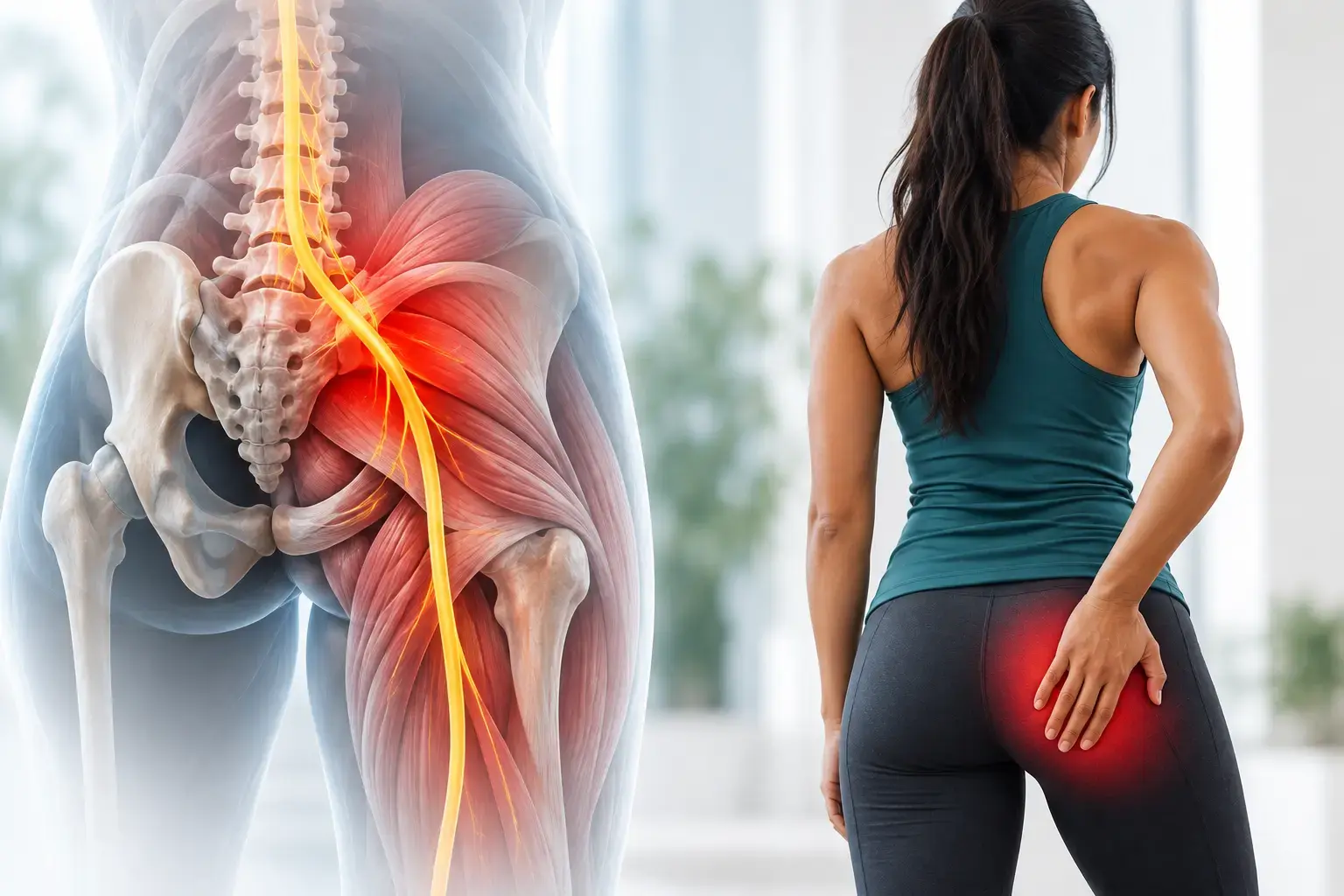
One minute you’re bending down to tie your shoelaces, picking up a shopping bag or lifting a suitcase into the car. The next, your lower back “goes”, leaving you struggling to stand upright, get out of bed or move comfortably.
If this sounds familiar, you’re certainly not alone.
Lower back pain is one of the most common musculoskeletal conditions worldwide and one of the leading causes of disability. For many people, however, the biggest frustration isn’t the first episode—it’s that the same problem seems to return again and again.
You recover, get back to normal life, and then several months later another seemingly harmless movement causes your back to seize up.
It’s understandable to wonder:
“Why does this keep happening?”
Many people begin to lose confidence in their back. They become cautious about bending, lifting, exercising or even playing with their children because they’re worried another episode is just around the corner.
The good news is that recurrent back pain doesn’t necessarily mean your back is weak, damaged or permanently vulnerable.
In many cases, recurring episodes reflect something much more positive: your body has the ability to recover, but it may not yet have rebuilt the physical capacity needed to comfortably cope with the demands being placed upon it.
Understanding that difference changes the focus from simply waiting for pain to settle to building a stronger, more resilient back for the future.
It’s Rarely One “Wrong” Movement
One of the biggest myths surrounding lower back pain is that it’s caused by one incorrect movement.
People often say:
“I bent over to pick up my socks.”
“I only reached into the washing machine.”
“I sneezed and my back went.”
While these movements may have been the trigger, they’re rarely the whole story.
Think of it like filling a glass with water.
One drop doesn’t make it overflow.
Neither do the next hundred.
Eventually, one final drop causes the water to spill.
That final drop isn’t entirely responsible—it was simply the last addition after everything that came before.
Lower back pain often behaves in a similar way.
Perhaps you’ve been:
- Sitting for long periods at work.
- Sleeping poorly.
- Feeling stressed.
- Training inconsistently.
- Doing more lifting than usual.
- Recovering from a previous flare-up.
- Less physically active than normal.
Each of these may slightly reduce your body’s ability to tolerate physical load.
Eventually, one completely ordinary movement exceeds your current capacity—and your back becomes painful.
The movement wasn’t necessarily dangerous.
It simply revealed that your body wasn’t quite prepared for the demands being placed upon it.
Why Does My Back Keep Going?
Although every individual is different, there are several common reasons why lower back pain tends to recur.
1. Pain Settled Faster Than Your Capacity Returned
This is probably the biggest misconception I see in clinic.
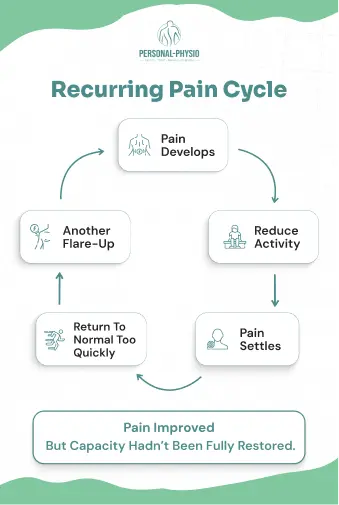
Pain often improves long before your body has fully recovered.
Once the pain has settled, it’s easy to assume everything is back to normal. You return to lifting, gardening, running or the gym because your back “feels fine.”
However, your muscles, tendons and nervous system may still be rebuilding their ability to tolerate load.
This gap between feeling better and being ready is where many recurrences occur.
One of the main aims of rehabilitation is bridging that gap safely.
2. Your Physical Demands Changed Faster Than Your Body Could Adapt
Our bodies are remarkably adaptable.
Given the right amount of challenge, they become stronger.
The problem usually isn’t movement.
It’s asking the body to do more than it’s currently prepared for.
Examples include:
- Returning to the gym after several weeks off.
- Spending all week sitting before doing a heavy weekend workout.
- Moving house.
- Long days of gardening.
- Carrying children more than usual.
- A sudden increase in running mileage.
None of these activities are inherently harmful.
They simply increase the demands placed upon your body.
If those demands rise faster than your body can adapt, symptoms may develop.
3. Recovery Involves More Than Exercise
Recovery isn’t determined solely by what happens in the gym.
Sleep, stress, workload and general health all influence how well your body recovers.
Many people notice their back pain is more likely to flare during particularly stressful periods, after poor sleep or when work becomes exceptionally busy.
That doesn’t mean the pain is “all in your head.”
Rather, it reflects the fact that the body and nervous system respond to physical and psychological stress together.
Looking after recovery is just as important as choosing the right exercises.
4. You Stopped Rebuilding Once The Pain Improved
This is completely understandable.
When pain settles, most people simply want to get on with life.
Unfortunately, stopping rehabilitation too early often means the underlying factors that contributed to the problem remain unchanged.
Think about someone recovering from an ankle sprain.
If they stop rehabilitation as soon as walking becomes comfortable, they may never fully restore strength, balance or confidence.
The same principle applies to the lower back.
Rehabilitation shouldn’t finish when pain settles.
It should continue until your body is prepared for the activities you want to return to.
5. Fear Can Become Part Of The Problem
After a painful episode, it’s natural to become protective.
Many people start avoiding bending, lifting or twisting because they associate those movements with pain.
Initially, this can feel sensible.
Over time, however, avoiding movement completely may reduce confidence and gradually lower your body’s tolerance for those very activities.
For most people with uncomplicated lower back pain, the goal isn’t to avoid movement forever.
It’s to gradually rebuild confidence through appropriate, progressive loading.
Your back is designed to move.
Helping it regain confidence in doing so is often an important part of recovery.
What If I Injured My Back in the Gym?
Many people who strength train assume that if their back became painful during a deadlift, squat or overhead press, the exercise itself must have been the cause.
Sometimes that’s true.
More often, it’s only part of the picture.
Perhaps you’ve recently:
- Increased the weight or training volume more quickly than usual.
- Returned to training after time away from the gym.
- Been accumulating fatigue over several weeks.
- Been sitting at a desk all week before a heavy lifting session.
- Been sleeping poorly or recovering less effectively than normal.
The exercise may have been the movement that triggered your pain, but it isn’t always the underlying reason your back became painful.
Rather than asking, “Was deadlifting bad for my back?”, a more useful question is:
“Was my body adequately prepared for the demands I placed upon it?”
Strength training itself isn’t the enemy. In fact, when appropriately prescribed, it is one of the most effective ways to build the physical capacity needed to support a healthy back and reduce the likelihood of future flare-ups.
The goal of rehabilitation isn’t to avoid exercises such as squats or deadlifts forever. It’s to understand why your symptoms developed, rebuild confidence and progressively prepare your body to return to those movements safely.
At Personal-Physio, one of the aims of rehabilitation is not simply to help people recover from injury, but to help them return confidently to the activities they enjoy—including strength training.
Common Mistakes After “Putting Your Back Out”
Most people respond to acute back pain with the best of intentions.
Unfortunately, some common approaches can make recurring episodes more likely.
Waiting For Pain To Disappear Before Becoming Active
Rest can be helpful during the first day or two if symptoms are severe.
However, prolonged inactivity often delays recovery.
Gentle movement, walking and gradually returning to normal activities are generally encouraged as symptoms allow.
Rushing Straight Back To Normal
The opposite can also happen.
As soon as the pain improves, people return immediately to heavy lifting, intense gym sessions or physically demanding work.
Although pain has settled, capacity may still be rebuilding.
A gradual return is usually more successful than trying to pick up exactly where you left off.
Chasing Short-Term Relief
Massage, manual therapy, heat and other treatments can all be valuable for reducing pain and improving movement.
However, if every episode is managed in exactly the same way without addressing why it keeps happening, the pattern often repeats itself.
The best long-term outcomes usually come from combining symptom relief with progressive rehabilitation that improves strength, movement and confidence.
What Actually Helps Reduce Future Flare-Ups?
Although every person’s situation is different, there are several principles that consistently help reduce the likelihood of recurring episodes.
1. Keep Moving
One of the biggest changes in the management of lower back pain over recent decades has been recognising the importance of remaining active.
While a short period of relative rest may be appropriate if pain is particularly severe, prolonged bed rest is generally no longer recommended for most episodes of uncomplicated lower back pain.
Gentle walking, changing positions regularly and gradually returning to normal daily activities can help reduce stiffness, maintain confidence and support recovery.
The goal isn’t to ignore pain or push through severe symptoms. Instead, it’s to find an appropriate level of movement that your body can comfortably tolerate while gradually building back up.
2. Rebuild Strength and Physical Capacity
As symptoms settle, rehabilitation should shift from simply reducing pain towards improving your body’s ability to cope with everyday demands.
This doesn’t necessarily mean lifting heavy weights.
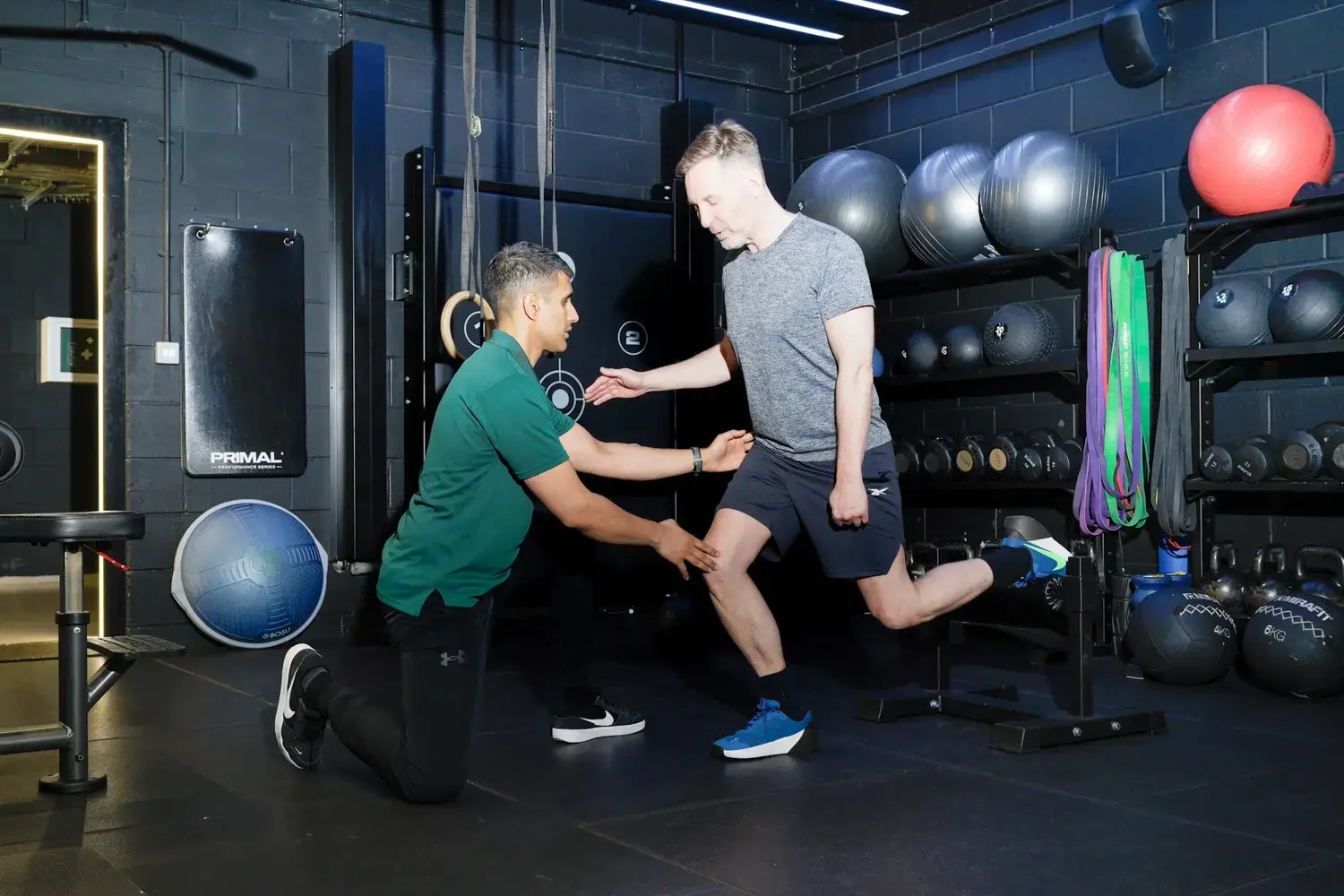
It means progressively rebuilding the strength, coordination and endurance needed for your own lifestyle.
Depending on your goals, rehabilitation may include:
- Lower limb strengthening
- Hip and trunk strengthening
- Lifting and carrying exercises
- Balance and coordination work
- Walking or cardiovascular exercise
- Gradual return to gym training
- Sport-specific rehabilitation
The aim isn’t to create a “strong back.”
The aim is to build a body that is well prepared for the demands placed upon it.
3. Don’t Forget Recovery
Exercise places stress on the body.
Recovery allows the body to adapt.
Poor sleep, prolonged stress, busy work periods and inadequate recovery can all reduce your ability to tolerate physical demands.
If your back pain seems to flare during particularly stressful periods, after several poor nights’ sleep or when you’ve been working long hours, that doesn’t mean the pain is imagined.
It simply highlights that recovery is an important part of rehabilitation.
Looking after your recovery can be just as valuable as choosing the right exercises.
4. Build Confidence, Not Fear
Perhaps one of the biggest goals of rehabilitation is restoring confidence in movement.
Many people become afraid of bending, lifting or twisting after a painful episode.
While this response is completely understandable, avoiding these movements forever isn’t usually the answer.
The lower back is designed to bend.
It’s designed to lift.
It’s designed to tolerate load.
The key is rebuilding those abilities gradually and progressively.
Each successful movement helps rebuild trust in your body.
When Should You Seek Medical Advice?
The vast majority of acute lower back pain settles with time and appropriate management.
However, some symptoms require urgent medical assessment.
Seek prompt medical attention if your back pain is associated with:
- New or worsening weakness in one or both legs.
- Loss of bladder or bowel control.
- Numbness around the saddle area.
- Significant trauma.
- Fever, unexplained weight loss or feeling generally unwell.
- Severe, unremitting pain that is progressively worsening.
- A history of cancer combined with new, unexplained back pain.
If you’re ever unsure, it’s always safer to seek professional medical advice.
How Personal-Physio Can Help
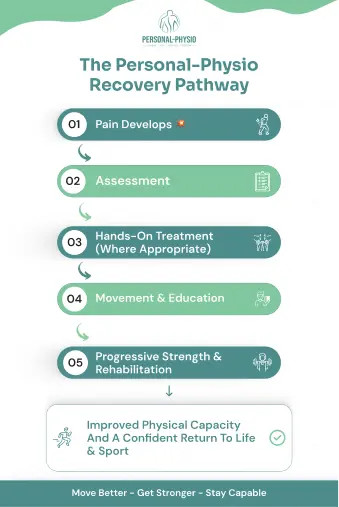
At Personal-Physio, treatment doesn’t begin with assumptions.
It begins with understanding.
During your assessment, we take the time to understand not only where your pain is, but also what may be contributing to it.
That includes looking at:
- Your previous episodes of back pain.
- Your work and lifestyle.
- Your training history.
- Your movement.
- Your strength.
- Your recovery.
- Your goals.
Rather than simply focusing on reducing symptoms, we aim to understand why your back became painful in the first place.
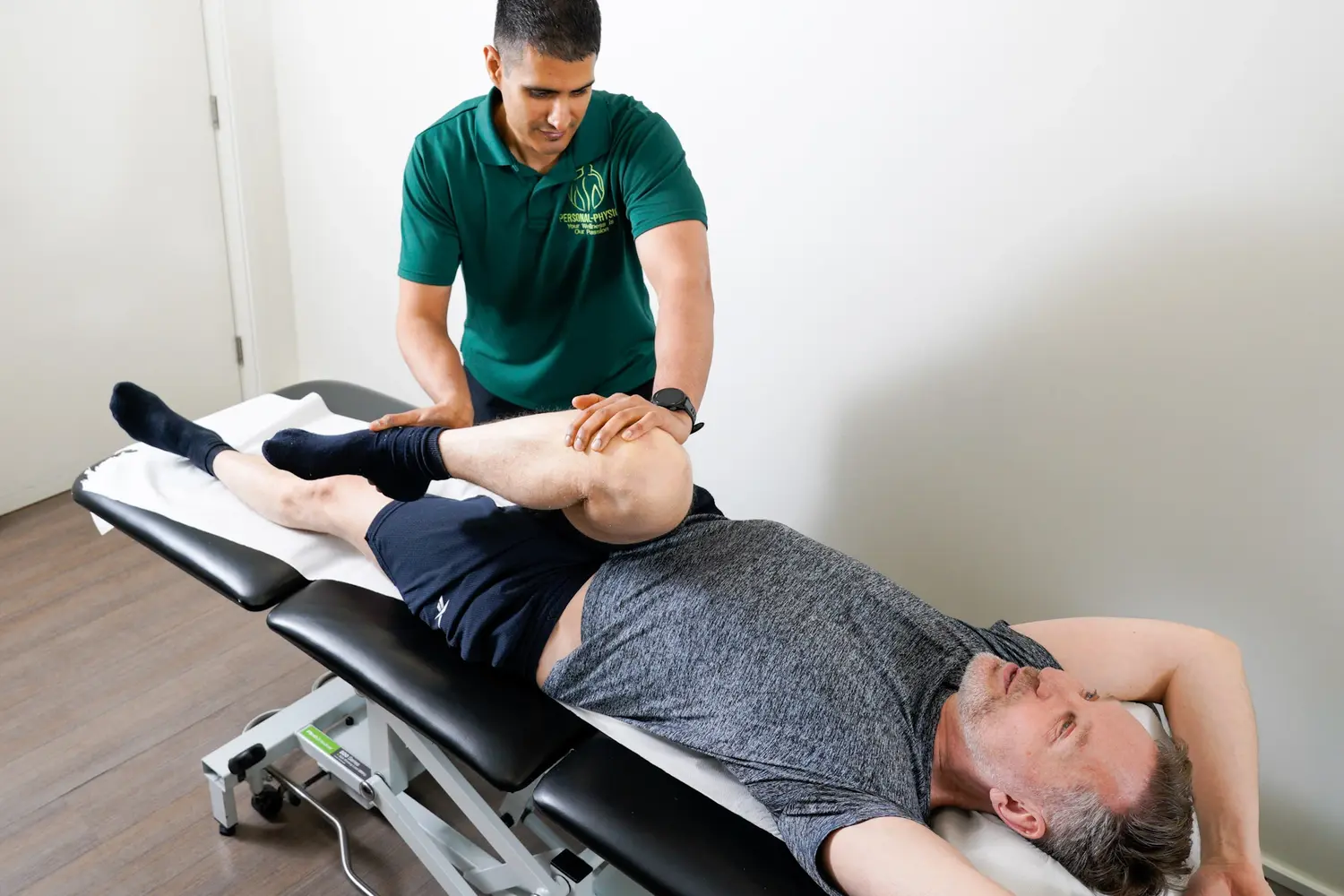
Where appropriate, treatment may include hands-on therapy to help reduce pain and improve movement. This may involve soft tissue therapy, joint mobilisation, sports massage, acupuncture or dry needling depending on your presentation and preferences.
However, symptom relief is only one part of the process.
Rehabilitation then focuses on progressively rebuilding strength, movement, confidence and physical capacity so that your body is better prepared for the demands of work, sport and everyday life.
Every programme is tailored to the individual because no two people—and no two episodes of back pain—are exactly the same.
Final Thoughts
If your lower back keeps “going,” it’s understandable to feel frustrated or begin losing confidence in your body.
However, recurring episodes don’t necessarily mean your back is weak or permanently damaged.
More often, they reflect that your body’s current capacity has been exceeded by the demands placed upon it.
The encouraging news is that capacity can often be rebuilt.
With the right combination of education, movement, progressive rehabilitation and strength training, many people are able to reduce the frequency of future episodes and return to the activities they enjoy with greater confidence.
Recovery isn’t simply about waiting for pain to disappear.
It’s about helping your body become better prepared for whatever life asks of it next.
At Personal-Physio, our goal is to help you understand your symptoms, move with greater confidence and build the physical resilience to keep doing the things that matter most.
Move Better. Get Stronger. Stay Capable.
References
Foster, N.E. et al. (2018) ‘Prevention and treatment of low back pain: evidence, challenges, and promising directions’, The Lancet, 391(10137), pp. 2368–2383.
National Institute for Health and Care Excellence (NICE) (2020) Low Back Pain and Sciatica in Over 16s: Assessment and Management (NG59). London: NICE.
O’Sullivan, P. (2012) ‘It’s time for change with the management of non-specific chronic low back pain’, British Journal of Sports Medicine, 46(4), pp. 224–227.
Qaseem, A. et al. (2017) ‘Noninvasive treatments for acute, subacute and chronic low back pain: A clinical practice guideline from the American College of Physicians’, Annals of Internal Medicine, 166(7), pp. 514–530.
World Health Organization (2020) WHO Guidelines on Physical Activity and Sedentary Behaviour. Geneva: World Health Organization.