If you are feeling stiff, sore, tight or uncomfortable, it can be difficult to know what type of appointment to book.
Do you need a sports massage?
Do you need physiotherapy?
Or do you need a combination of both?
This is a common question, especially for people dealing with back pain, neck tension, shoulder tightness, hip stiffness, running-related aches, gym soreness or recurring discomfort from work and training.
The honest answer is that both physiotherapy and sports massage can be useful. They are not in competition. But they do have different roles.
Sports massage can be excellent for short-term relief, muscle tension, soreness, stiffness and recovery. Physiotherapy goes further by assessing why symptoms may be happening, what needs to change, and how to build a plan that helps you move better over time.
At Personal-Physio, hands-on treatment is an important part of the way we work. But it is not used in isolation. It is combined with assessment, advice, rehabilitation and strength-based progression where appropriate.
The goal is not just to feel better for a few days. The goal is to understand what is driving the problem and build longer-term confidence, movement and resilience.
What Is Sports Massage?
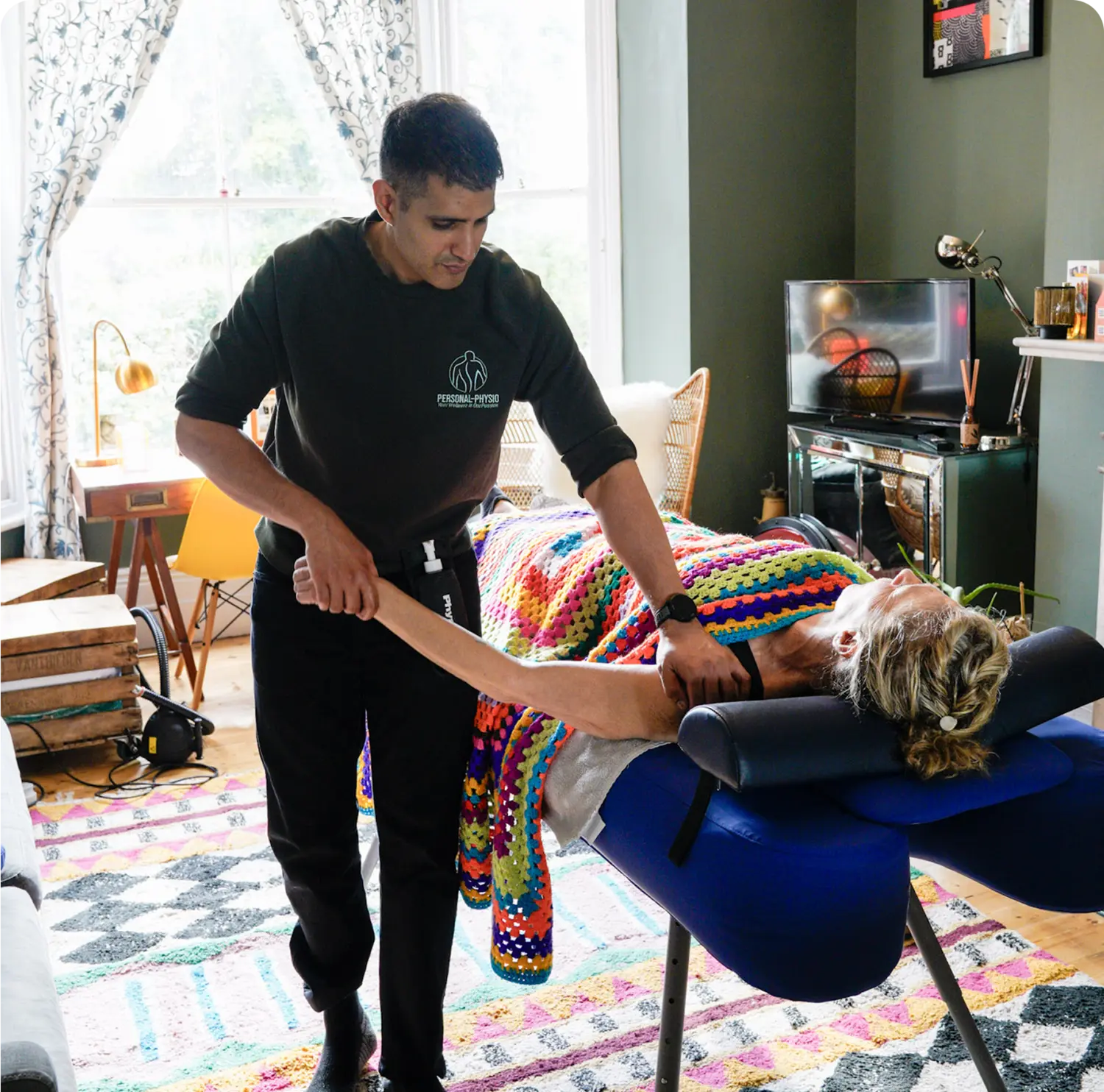
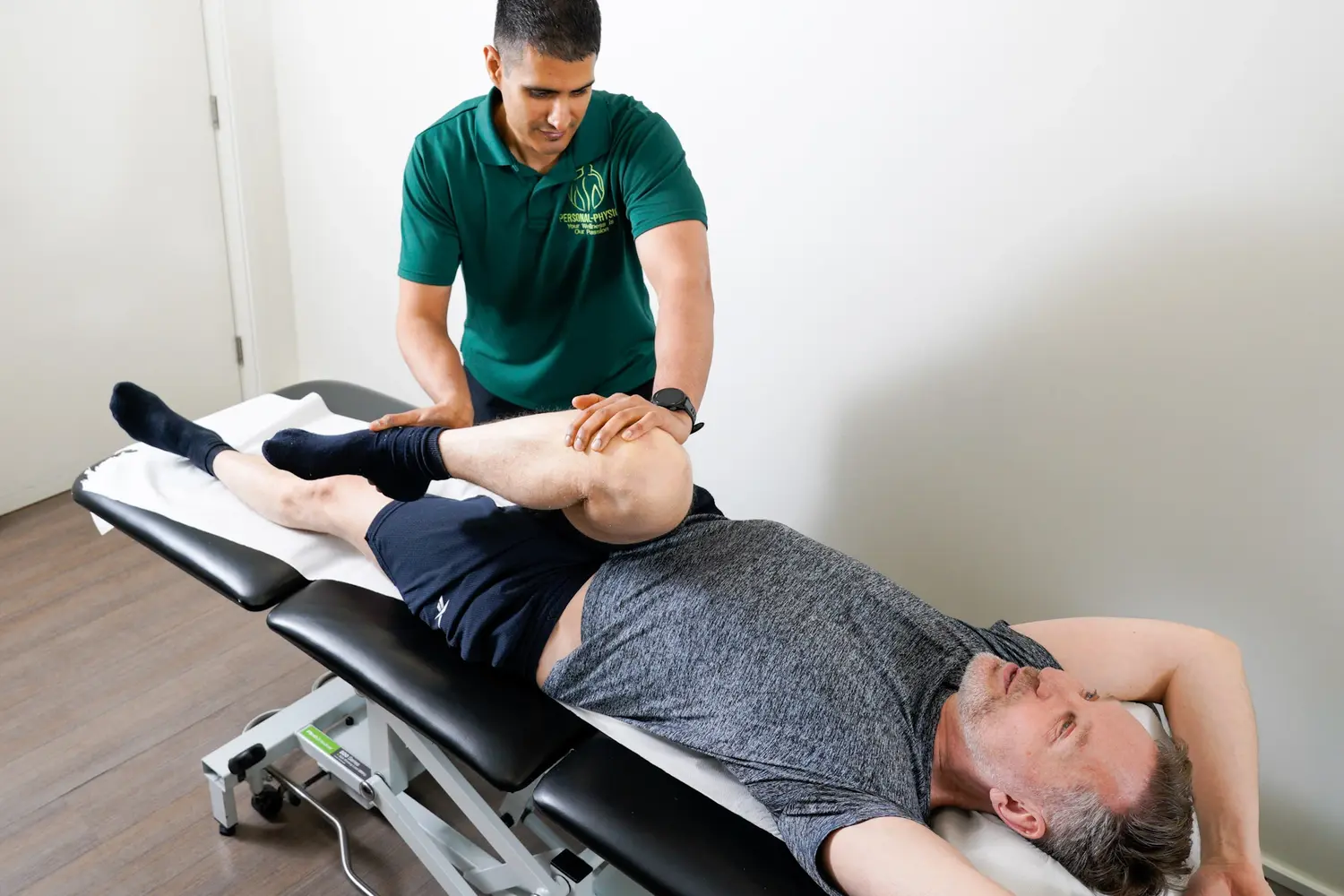
Sports massage is a form of hands-on treatment that focuses on muscles and soft tissues.
Despite the name, it is not only for athletes.
Many people benefit from sports massage, including office workers, runners, gym-goers, busy professionals, manual workers and people who feel generally stiff or tense.
Sports massage may be useful for:
- muscle tightness
- general stiffness
- post-exercise soreness
- heavy training periods
- neck and shoulder tension
- back and hip tightness
- recovery support
- short-term symptom relief
- helping someone feel more comfortable moving
The treatment may involve a range of soft tissue techniques, including deeper pressure, trigger point work, muscle release, assisted stretching or more general massage techniques depending on the person and their preference.
For many people, sports massage helps them feel looser, more relaxed and more comfortable. It can also be a useful way to manage symptoms during busy training or work periods.
Research on massage suggests it may help some people with musculoskeletal pain, particularly in the short term. For example, a Cochrane review found that massage was better than inactive controls for pain and function in subacute and chronic low back pain in the short term, although effects were less clear over the longer term (Furlan et al., 2015).
That fits well with how sports massage is best understood: useful, often valuable, but usually not the whole solution when symptoms keep returning.
What Is Physiotherapy?
Physiotherapy is broader than hands-on treatment.
A physiotherapist is trained to assess pain, injury, movement, function, medical history and rehabilitation needs. Physiotherapy helps restore movement and function when someone is affected by injury, illness or disability, using approaches such as movement, exercise, manual therapy, education and advice (Chartered Society of Physiotherapy, 2023).
In practice, physiotherapy may include:
- a detailed assessment
- clinical reasoning around possible causes
- movement and strength testing
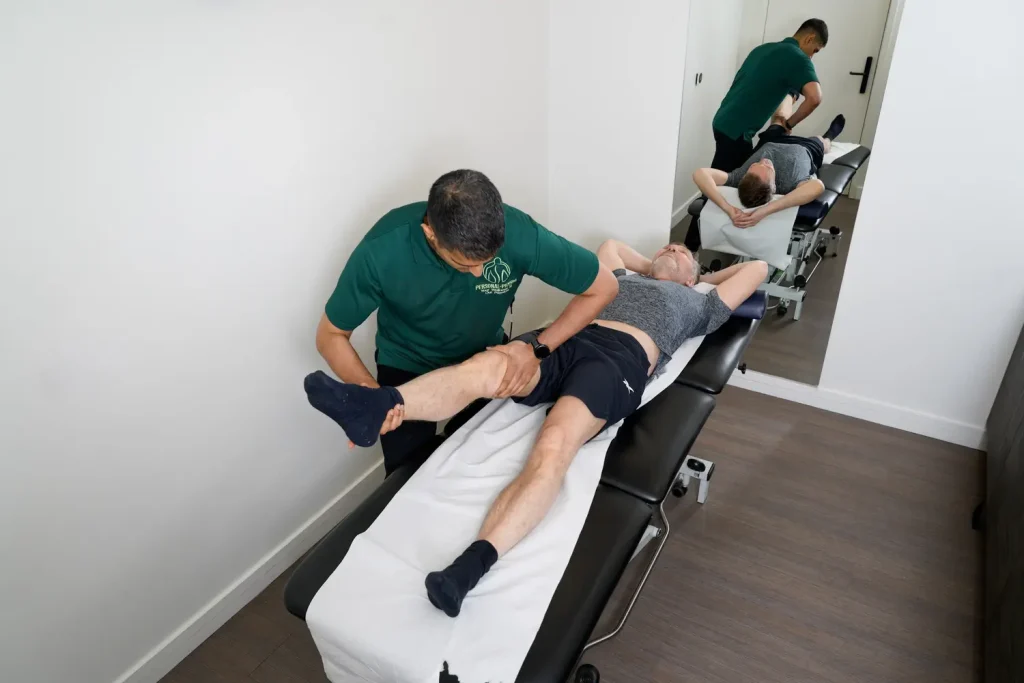
- hands-on treatment where appropriate
- education and advice
- activity modification
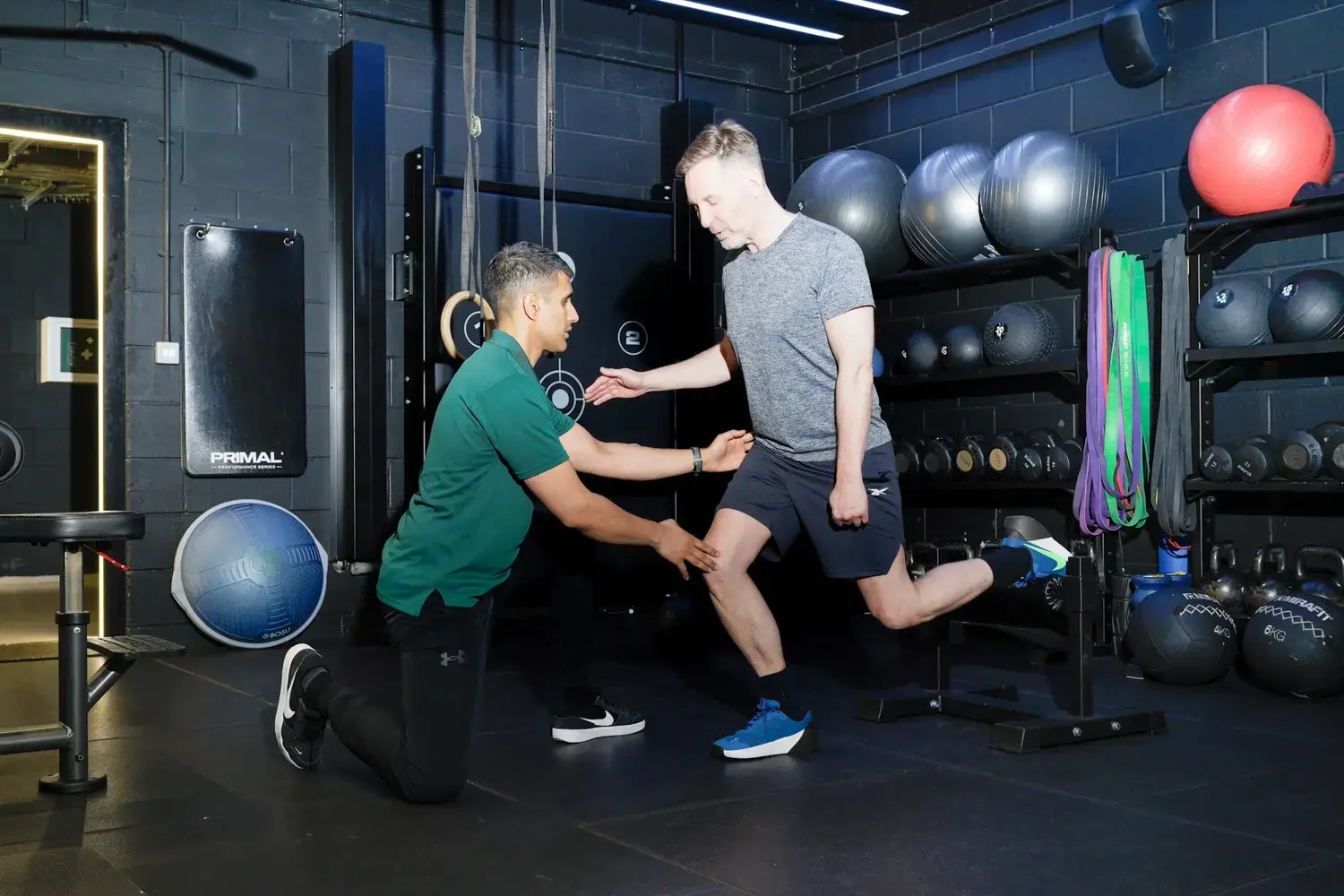
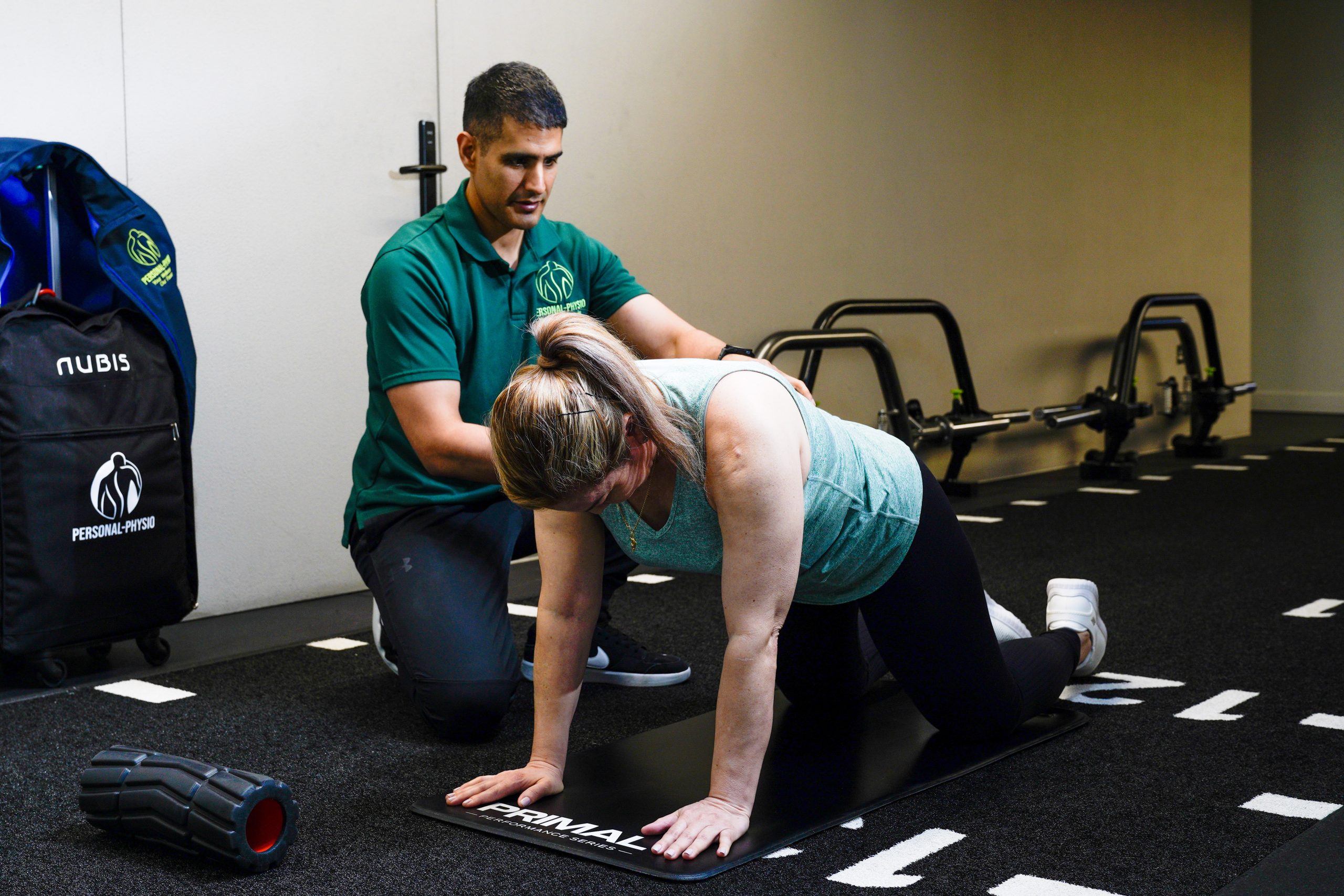
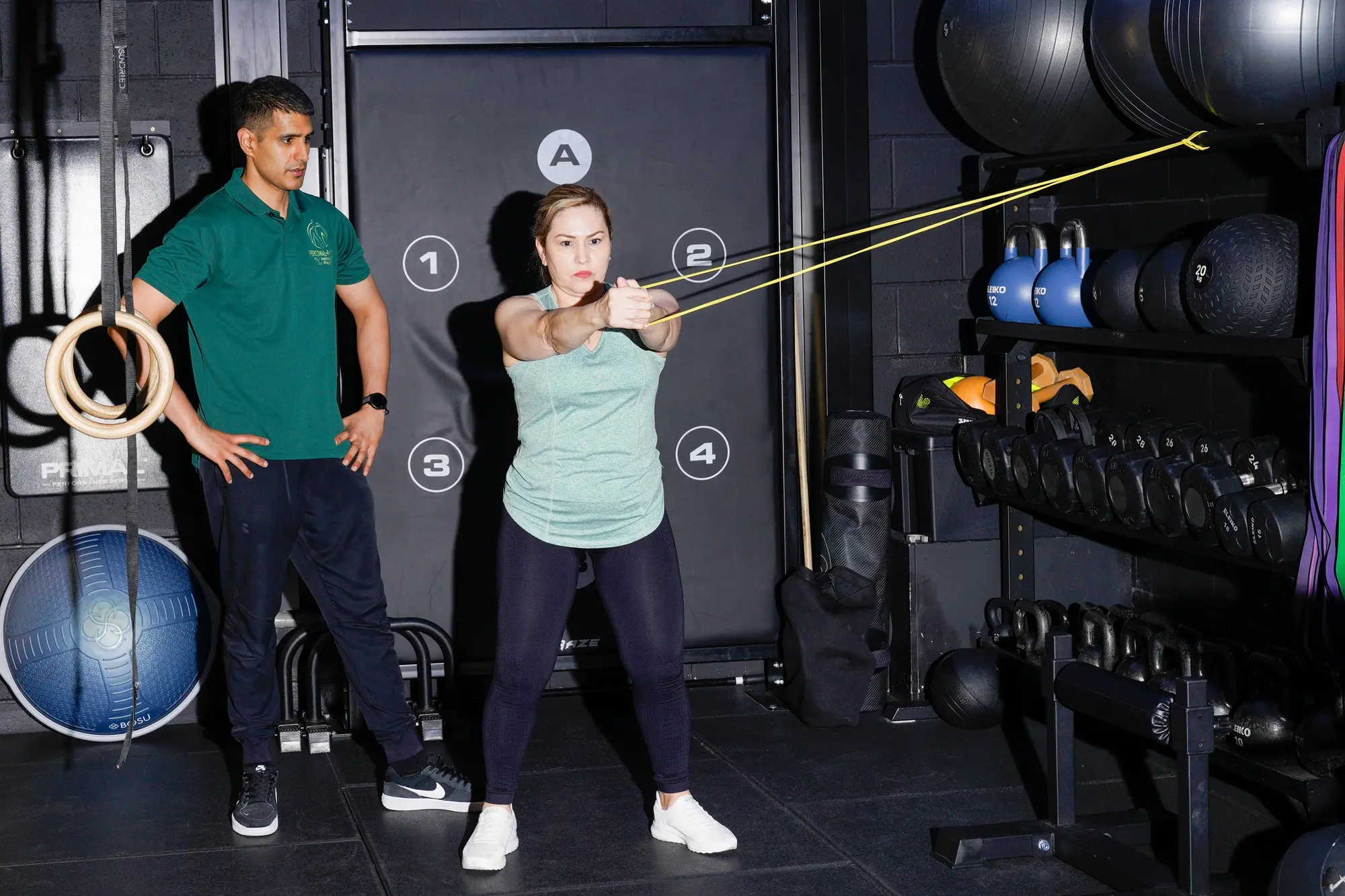
- rehabilitation exercises
- progressive strength training
- return-to-sport or return-to-gym planning
- guidance on managing flare-ups
- referral onward where needed
Physiotherapy is often more appropriate when symptoms are persistent, recurring, limiting your activity, linked to an injury, or affecting confidence with movement.
For example, if you have knee pain every time you run, shoulder pain whenever you press overhead, back pain that keeps flaring after gym sessions, or neck pain that returns every few weeks, massage may help symptoms settle temporarily — but physiotherapy can help you understand why the issue keeps returning.
The Main Difference
The simplest way to think about the difference is this:
Sports massage focuses mainly on how the tissues feel.
Physiotherapy looks at why symptoms are happening and what needs to change.
That does not mean physiotherapy is better than massage. It means they answer different questions.
Sports massage may ask:
“How can we reduce tension, soreness or stiffness today?”
Physiotherapy may ask:
“Why is this area becoming overloaded, sensitive or painful, and what plan will help it improve?”
Both questions can matter.
If your main issue is general muscle tightness after training or a stressful week, a sports massage may be enough.
If your symptoms are recurring, worsening, linked to a specific movement, affecting your sport or stopping you doing normal activities, physiotherapy is usually the better starting point.
When Sports Massage May Be Enough
Sports massage may be a good option if you feel generally tight, stiff or sore, but you do not have a clear injury or significant movement limitation.
It may be useful if:
- you feel tight after training
- your legs feel heavy from running or gym work
- your neck and shoulders feel tense after desk work
- you want short-term relief from muscular stiffness
- you are preparing for or recovering from an event
- you know your symptoms respond well to massage
- you are not experiencing worsening pain, weakness, numbness or major functional limitation
In these situations, sports massage can be a helpful part of self-care, recovery and general maintenance.
However, if the same tightness keeps returning in the same place, it may be worth asking a deeper question.
Is the area tight because it is overworked?
Is it under-conditioned?
Is another area not doing enough?
Is training load too high?
Is recovery too low?
Is your body being asked to tolerate more than it is currently prepared for?
That is where physiotherapy becomes more useful.
When Physiotherapy Is the Better Option
Physiotherapy is usually the better option if pain or stiffness is not just a one-off.
You may benefit from physiotherapy if:
- symptoms keep returning
- pain is getting worse
- pain is affecting work, sleep, exercise or daily life
- you have had a recent injury
- you feel unsure what movements are safe
- you are avoiding activity because of pain
- you have reduced strength, balance or confidence
- you have pain with running, lifting, sport or gym training
- you have nerve symptoms such as tingling, numbness or weakness
- you need a structured rehab plan
- you want to return to sport or training properly
Physiotherapy does not mean you will only be given exercises and no treatment. It means the treatment is guided by assessment and linked to a longer-term plan.
At Personal-Physio, physiotherapy may still include massage, soft tissue therapy, joint mobilisation, acupuncture or dry needling where appropriate. The difference is that these are used as part of a bigger process.
Why Massage Alone May Not Be Enough
Many people feel better after massage, but then notice the same symptoms returning a few days or weeks later.
This does not mean massage “didn’t work”.
It may have worked very well for short-term relief.
But if the underlying issue is related to strength, load tolerance, training habits, work posture, stress, sleep, movement control or repeated overload, massage alone may not fully address the problem.
For example:
A runner with recurring calf tightness may need calf strengthening and running load management.
Someone with neck tension from desk work may need movement variety, upper-back strength, better recovery and practical workday strategies.
A person with recurring lower back tightness may need hip and trunk strengthening, confidence with lifting, and better progression in the gym.
A tennis player with shoulder tightness may need rotator cuff strength, upper-back control and gradual return to serving.
This is why NICE guidance for low back pain recommends manual therapy, including soft tissue techniques such as massage, only as part of a treatment package that includes exercise, with or without psychological therapy (NICE, 2016).
That principle is useful beyond low back pain: hands-on treatment can help, but it often works best when combined with movement, strengthening and behaviour change.

How Sports Massage and Physiotherapy Can Work Together
The best approach is not always either sports massage or physiotherapy.
Often, the best approach is both.
Hands-on treatment can help reduce pain, stiffness, muscle tension or guarding. This can make it easier to move, exercise and rebuild confidence.
Rehab and strength work can then help improve the body’s capacity so symptoms are less likely to keep returning.
A useful way to think about it is:
Massage can help you feel better.
Physiotherapy can help you understand why it happened.
Rehab and strength work can help you become more resilient.
At Personal-Physio, this is how hands-on treatment fits into the wider process.
It can create a window for better movement. But we also want to use that window well — by restoring movement, building strength, improving confidence and helping you return to the activities that matter.
What Might a Personal-Physio Appointment Include?
A Personal-Physio appointment is shaped around the person, not just the symptom.
Depending on what you need, the session may include:
- a discussion about your symptoms, goals and activity
- movement assessment
- strength or functional testing
- hands-on treatment
- sports massage or soft tissue therapy
- joint mobilisation
- acupuncture or dry needling where appropriate
- advice about work, training or recovery
- rehab exercises
- strength-based progression
- return-to-gym, return-to-running or return-to-sport planning
For some people, the session may be mostly hands-on treatment with a small amount of advice.
For others, it may involve a more detailed physiotherapy assessment and a structured rehab plan.
For many people, it sits somewhere in the middle: enough treatment to help symptoms settle, and enough rehab to create longer-term change.
Which One Should You Book?
A sports massage may be enough if your symptoms are mild, familiar, muscular, short-term and not limiting your normal activity.
Physiotherapy is usually more appropriate if the issue is painful, recurring, unclear, worsening, linked to injury, or stopping you from doing the things you want to do.
You may also benefit from physiotherapy if you want to understand the problem properly and have a plan rather than relying on short-term relief alone.
A simple guide would be:
Book sports massage if you mainly want help with tension, soreness or general stiffness.
Book physiotherapy if you want assessment, diagnosis, advice, rehab and a plan for longer-term improvement.
Book physio-led rehab if you want to move from pain or injury towards better strength, confidence and performance.
Red Flags: When to Seek Medical Advice
Most muscle and joint pain is not serious, but some symptoms should be assessed urgently.
Seek medical advice promptly if you have:
- new or worsening weakness
- numbness or tingling that is progressing
- changes in bladder or bowel control
- numbness around the saddle area
- significant trauma
- fever, unexplained weight loss or feeling generally unwell
- severe constant pain that is worsening or disturbing sleep significantly
- chest pain, shortness of breath, dizziness or other concerning symptoms
If you are unsure, it is better to get checked.
Final Thoughts
Sports massage and physiotherapy both have value.
Sports massage can be very useful for reducing muscle tension, soreness and stiffness. Physiotherapy goes further by assessing what is driving the symptoms and building a plan to improve movement, strength, confidence and long-term resilience.
The right choice depends on what you need.
If you want short-term relief, sports massage may be enough. If you want to understand why symptoms keep returning, physiotherapy is usually the better option.
At Personal-Physio, hands-on treatment is not dismissed or treated as secondary. It is an important part of the process when clinically appropriate. But it works best when combined with clear assessment, practical advice and progressive rehab.
The goal is simple: help you feel better, move better and stay capable.
Book a physiotherapy, sports massage or rehabilitation appointment with Personal-Physio in Central London.